
What to Expect the First 72 Hours After Knee Replacement

The first few days after knee replacement can feel like a lot.
You've gone from preparing for surgery to suddenly managing a new knee, medications, swelling, a walker, disrupted sleep, and everyday tasks that may be much harder than they were just a few days ago.
And because many knee replacements now involve a relatively short hospital stay—or even same-day discharge—a significant part of these first 72 hours may happen at home.
While everyone's experience is different, knowing what commonly happens during these early days can make recovery feel much less unpredictable.
Related: How Do You Mentally Prepare for Knee Replacement Surgery? →
What Happens Immediately After Knee Replacement?
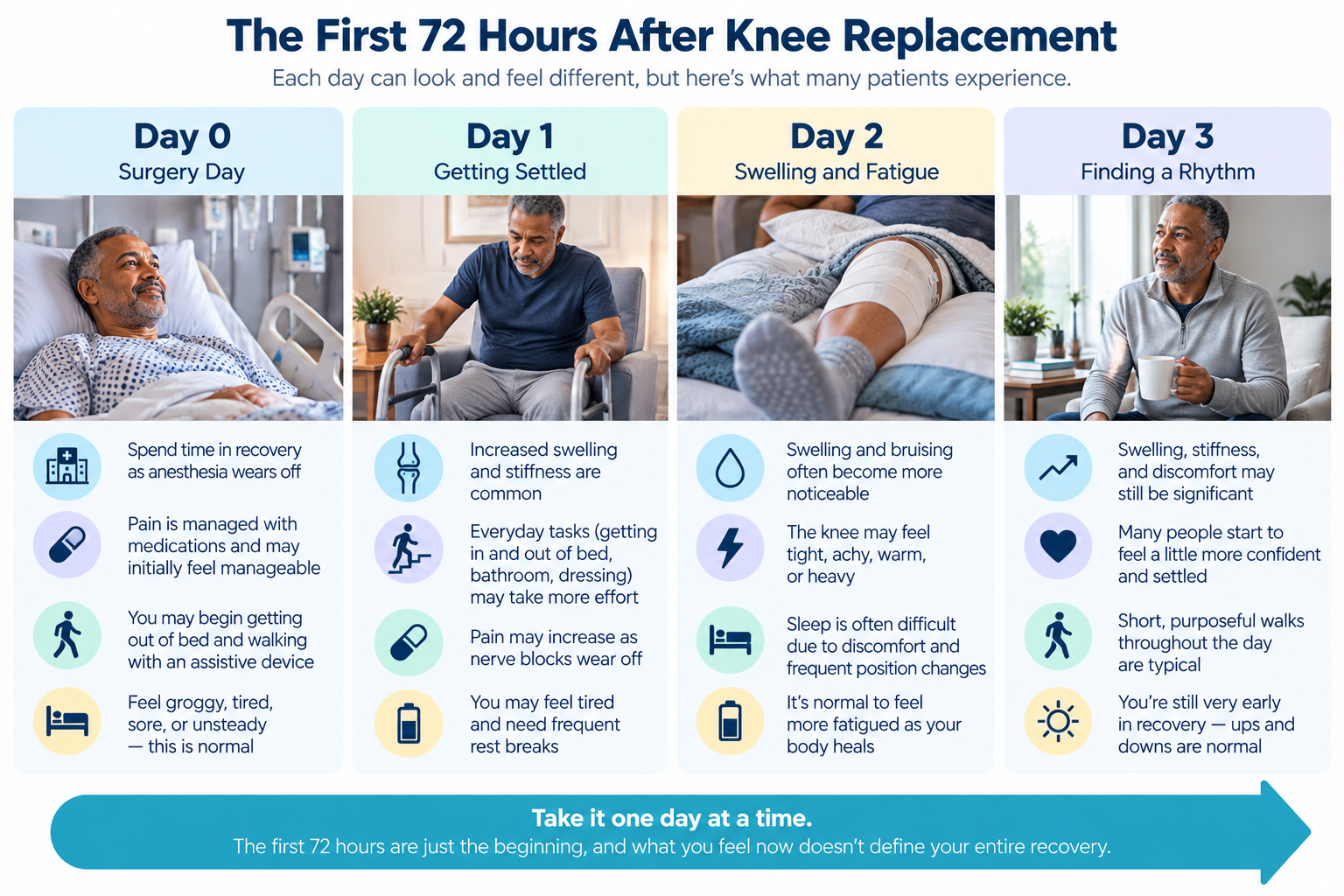
After surgery, you'll spend time in a recovery area while the effects of anesthesia are monitored.
Your knee will be bandaged, and your surgical team will monitor things like your pain, vital signs, sensation, and ability to safely begin moving.
Depending on your surgeon and hospital, you may also meet with a physical therapist or other member of the care team relatively soon after surgery.
One of the first milestones is often simply getting out of bed and walking safely with an assistive device, such as a walker.
You aren't expected to feel normal.
Feeling tired, groggy, sore, weak, or somewhat unsteady can all occur during this early period.
Still preparing for surgery? Learn what to consider when packing your hospital bag for knee replacement →
What Does the First Night After Knee Replacement Feel Like?
The first night varies considerably from person to person.
Some patients are surprised that their pain initially feels relatively manageable. Others experience significant discomfort early on.
Anesthesia, nerve blocks, and pain medications used around the time of surgery can temporarily change how the knee feels. As those effects change or begin wearing off, pain may become more noticeable.
The knee may feel:
Achy or sore
Tight
Heavy
Warm
Swollen
Difficult to move
Finding a comfortable sleeping position can also be challenging.
And even when you're exhausted, sleep after knee replacement can be surprisingly difficult.
Between discomfort, medications, getting up to use the bathroom, and simply being out of your normal routine, the first few nights are often fragmented.
What Should I Expect on Day 1 After Knee Replacement?
By the first day after surgery, the reality of recovery may start becoming more apparent.
Walking usually requires an assistive device, and ordinary activities such as getting in and out of bed, using the bathroom, getting dressed, or preparing food may take considerably more effort than usual.
Your knee may also begin feeling increasingly swollen and stiff.
This is an important time to remember that your job isn't to feel recovered yet.
You're at the very beginning of healing from a major operation.
Follow the medication, activity, wound-care, and mobility instructions provided by your surgical team, and accept help when you need it.
Why Can Pain and Swelling Increase After I Get Home?
This catches a lot of patients off guard.
You may leave the hospital or surgery center thinking:
“This isn't as bad as I expected.”
And then the next day feels very different.
There are several reasons for this. Medications and regional anesthesia used around surgery may begin wearing off. At the same time, your body's inflammatory response to surgery is developing, and swelling may become increasingly noticeable during the first few postoperative days.
That doesn't automatically mean something has gone wrong.
The early recovery experience can change considerably from one day to the next.
Related: How Long Does Swelling Last After Knee Replacement? →
Related: How Long Does Pain Last After Knee Replacement? →
Related: How Should You Prepare for the Ride Home After Knee Replacement? →
What Should I Expect on Days 2 and 3?
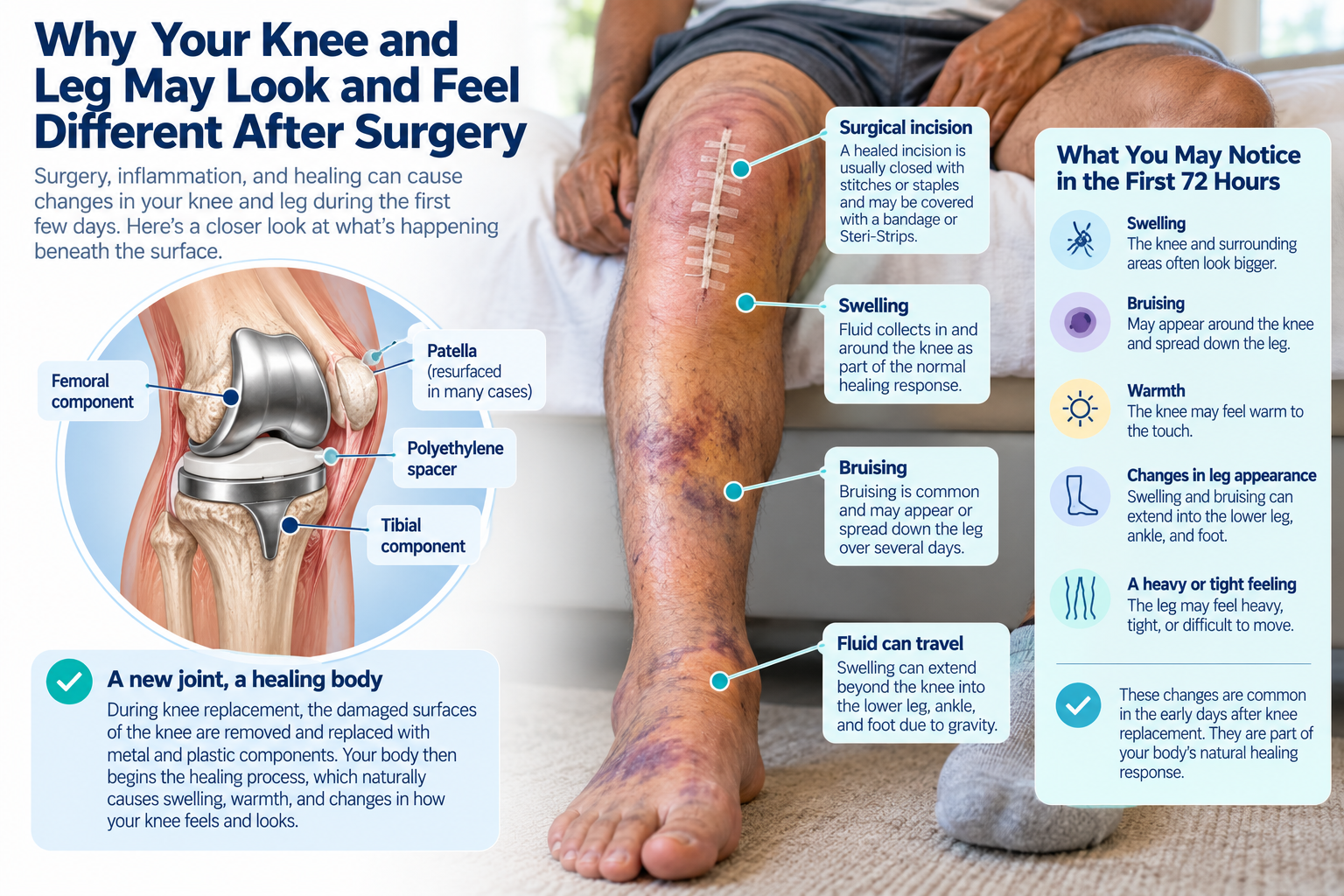
For many patients, days two and three are when swelling, bruising, stiffness, fatigue, and discomfort become especially noticeable.
Your knee may look significantly different than it did immediately after surgery.
Swelling can extend beyond the knee and into the lower leg, ankle, or foot. Bruising may also become more visible or begin traveling down the leg.
The knee can feel tight and difficult to bend, particularly when swelling increases.
You may also realize just how tiring recovery can be. A short walk, shower, home exercise session, or trip to the bathroom may require much more energy than you expected.
At this point, you're still extremely early in recovery. Feeling tired and dependent on others during these first few days does not tell you what your eventual recovery will look like.
Bruising can also become more noticeable during the first several days after surgery. Learn why bruising happens after knee replacement →
Related: How Long Does Stiffness Last After Knee Replacement? →
How Much Should I Be Walking During the First 72 Hours?
Your surgeon and physical therapist should provide instructions for walking and weight bearing based on your specific procedure and medical situation.
In general, early mobility is an important part of knee replacement recovery, but the goal isn't to see how far you can walk during the first few days.
You'll typically be taking short, purposeful walks throughout the day using the assistive device recommended by your healthcare team.
This is one area where more is not automatically better.
Follow your surgical team's instructions rather than comparing your walking distance with someone else's recovery.
Is It Normal to Feel Exhausted After Knee Replacement?
Yes.
Major surgery places significant stress on the body.
Add anesthesia, medications, pain, interrupted sleep, increased effort with basic activities, and the physical demands of beginning rehabilitation, and it's understandable that your energy may be very low.
You might feel surprisingly tired after activities that normally wouldn't require much effort.
Fatigue during these early days isn't a sign that you're doing poorly.
Your body is recovering from surgery.
What About Nausea, Constipation, and Appetite Changes?
These are worth mentioning because patients aren't always expecting them.
Some people experience nausea or decreased appetite after surgery. Anesthesia, pain medications, and the physical stress of surgery can all contribute.
Constipation is also common, particularly when opioid pain medication is being used and normal activity has decreased.
Your discharge instructions may include recommendations for medications, hydration, diet, or bowel management. Follow the specific plan provided by your healthcare team.
If nausea, vomiting, constipation, or difficulty eating and drinking becomes significant or persistent, contact your healthcare provider.
Appetite and digestion can also change after surgery. Learn what to eat after knee replacement surgery →
Why Is Sleeping So Difficult?
Pain isn't the only reason.
Swelling, stiffness, medications, changes in sleeping position, frequent bathroom trips, and difficulty getting comfortable can all contribute.
You may sleep for a few hours, wake up uncomfortable, reposition yourself, fall asleep again, and repeat the process throughout the night.
That's frustrating—but poor sleep during the first few nights after knee replacement is extremely common.
Your sleep pattern generally doesn't return to normal immediately after surgery.
What Can Feel Alarming but May Be Normal?
There are several things patients commonly notice during the first few days that can look or feel concerning:
Swelling around the knee and lower leg.
Bruising that becomes more noticeable.
Warmth around the surgical knee.
A heavy or difficult-to-move feeling in the leg.
Stiffness and tightness.
Significant fatigue.
Difficulty sleeping.
Changes in appetite.
None of these symptoms should automatically be dismissed, but their presence alone can occur during normal early recovery.
What's important is recognizing when the pattern changes or when symptoms are accompanied by other concerning signs.
When Should I Contact My Healthcare Team?
Your surgeon's postoperative instructions should always take priority, because they know your procedure and medical history.
Contact your surgical team promptly for concerning symptoms such as rapidly worsening pain or swelling, increasing redness, concerning wound drainage, fever or chills, significant calf pain or swelling, persistent vomiting or inability to keep fluids down, or other symptoms your surgeon instructed you to watch for.
Seek emergency medical care for symptoms such as new shortness of breath, chest pain, coughing up blood, fainting, or other severe or rapidly worsening symptoms.
When you're unsure whether something you're experiencing is expected, contact your surgical team.
Related: What’s Normal After Knee Replacement? Common Symptoms & Warning Signs →
The First 72 Hours Are Just the Beginning
The first few days after knee replacement can feel overwhelming because so much is happening at once.
Pain, swelling, stiffness, poor sleep, fatigue, medications, mobility, and everyday activities all suddenly require attention.
The good news is that these first few days aren't what the rest of your recovery will feel like.
Your knee has just undergone major surgery. Recovery happens gradually over the weeks and months ahead.
Want to Know What Comes Next?
The Post Op Ready Knee Replacement Bundle was created to help patients and families understand what to expect throughout recovery—from swelling and sleep to everyday activities, caregiver support, common recovery concerns, and returning to life.
Explore the Knee Replacement Bundle →
Preparing for Knee Replacement?
Start with our free Knee Replacement Checklist to help prepare your home and recovery plan before surgery.
