
What’s Normal After Knee Replacement? Common Symptoms & Warning Signs

After knee replacement, it’s easy to wonder whether every new ache, swollen area, warm spot, or strange sensation means something is wrong.
Your knee may look dramatically different from the other side. Bruising can show up farther down your leg. Swelling may change throughout the day. And just when you think you're turning a corner, you may have a day when everything feels more painful and stiff again.
The good news is that many of the symptoms that feel alarming after knee replacement are actually common parts of recovery.
But that doesn't mean every symptom should be ignored.
Knowing what commonly happens after knee replacement—and recognizing when something has changed enough to deserve a call to your surgical team—can make recovery feel much less uncertain.
This article provides general education and does not replace advice from your surgeon or medical team. Always follow the postoperative instructions provided specifically to you.
What Symptoms Are Common After Knee Replacement?
Every recovery looks a little different, but there are several symptoms that patients commonly experience after total knee replacement.
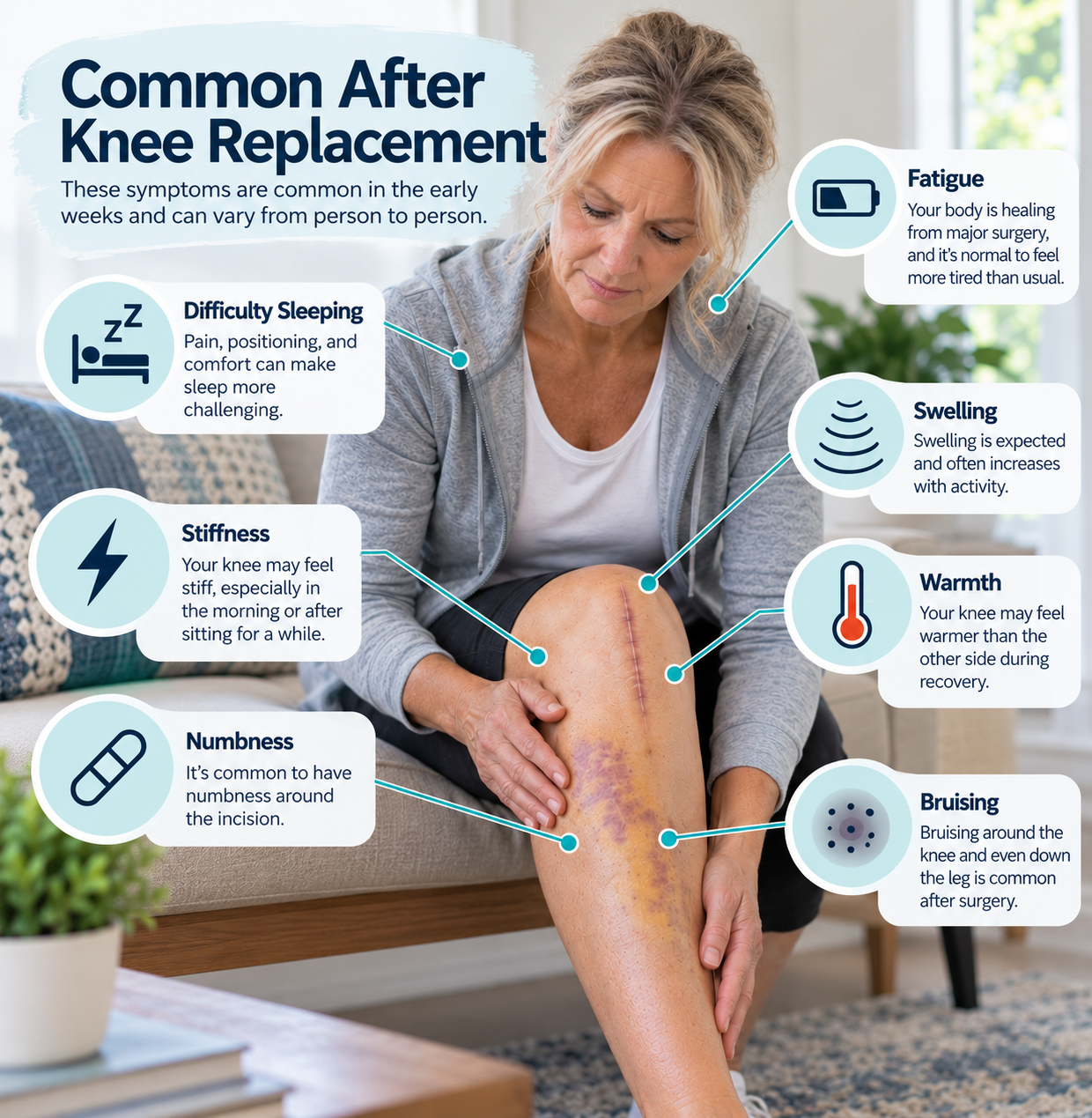
Swelling
Swelling is extremely common after knee replacement and isn't always limited to the knee itself. You may notice swelling extending into the lower leg, ankle, or foot.
It can also fluctuate significantly. Your knee might look relatively good in the morning and become noticeably more swollen after walking, exercising, physical therapy, or simply spending more time on your feet.
Swelling generally improves as recovery progresses, but it can stick around longer than many patients expect.
Related: How Long Does Swelling Last After Knee Replacement? →
Warmth Around the Knee
Don't be surprised if your surgical knee feels noticeably warmer than your other knee.
Some warmth is common during healing and can remain noticeable even as other symptoms begin improving.
What matters isn't simply whether your knee feels warm, but whether that warmth is occurring alongside other significant or worsening changes.
Bruising
Bruising after knee replacement can look surprisingly dramatic.
It may appear around the knee and thigh, but you can also notice bruising farther down the leg, including around the calf, ankle, or foot.
The bruising may also change colors and seem to move as recovery progresses.
Related: Is Bruising Normal After Knee Replacement? →
Pain, Tightness and Stiffness
Pain after knee replacement doesn't always feel the same from one day—or even one hour—to the next.
Aching, soreness, tightness, stiffness, and increased discomfort after activity are all commonly reported during recovery.
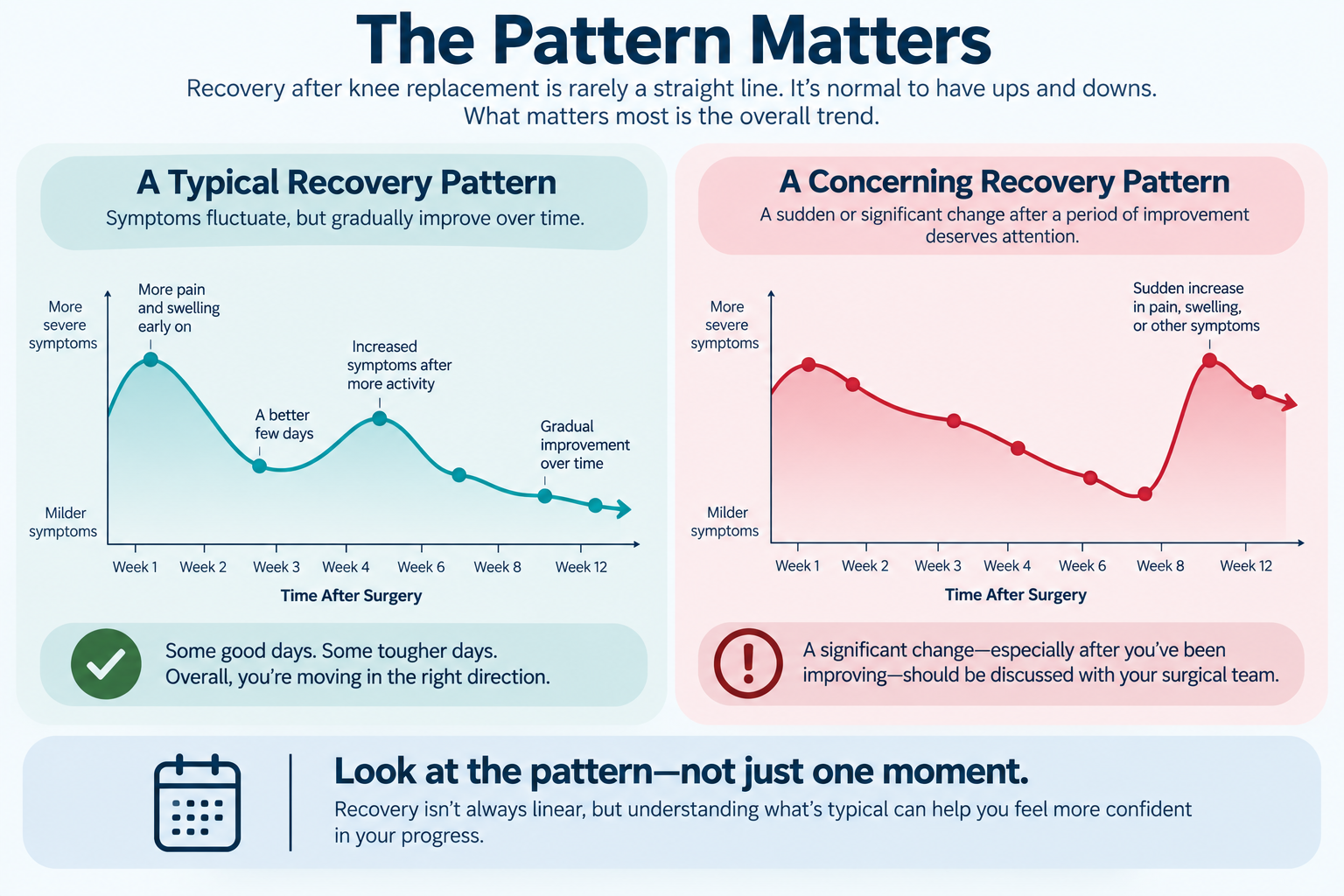
You may also have a difficult day after several better ones.
Recovery isn't perfectly linear. Look at the overall direction you're moving rather than judging your progress by a single bad day.
Related: How Long Does Pain Last After Knee Replacement? →
Numbness and Strange Sensations
The skin around your knee may not feel exactly the same after surgery.
Numbness, tingling, sensitivity, or simply an area that feels “different” can occur around the surgical area.
These sensations may change as your knee continues to heal.
Clicking or Clunking
Your knee may also sound different after replacement.
Some patients notice clicking, clunking, or other unfamiliar sensations when bending the knee, walking, or changing positions.
Hearing or feeling something new can certainly be unsettling, but noises and mechanical sensations aren't automatically a sign that something is wrong.
Fatigue
One of the symptoms patients often underestimate is how tired they may feel after knee replacement.
Your body is recovering from major surgery while you're also dealing with disrupted sleep, medications, reduced activity, and the demands of rehabilitation.
Even seemingly simple activities can take more energy than usual early in recovery.
Difficulty Sleeping
Sleep problems are extremely common during knee replacement recovery.
Finding a comfortable position can be difficult, and pain or stiffness may become more noticeable at night.
For many patients, sleep takes time to normalize—even when other parts of recovery are progressing well.
When Symptoms Deserve More Attention
The fact that pain, swelling, warmth, bruising, and other changes can occur after knee replacement doesn't mean every version of those symptoms should automatically be considered normal.
One of the most important things to pay attention to is change.
A symptom that is new, rapidly worsening, substantially different from your recent recovery pattern, or occurring alongside other concerning symptoms deserves more attention.
Increasing or spreading redness, concerning wound drainage, fever or chills, a significant unexplained increase in pain or swelling, or new calf pain are examples of symptoms that should prompt you to contact your surgical team.
Your surgeon may also give you specific instructions about your incision, temperature, swelling, pain, or other symptoms. Those instructions should always take priority over general information online.
The Pattern Matters
This is an important concept during knee replacement recovery.
Imagine your knee becomes more swollen after you've spent considerably more time on your feet. Now compare that with swelling that suddenly becomes much worse without an obvious reason.
Those are different patterns.
The same is true for pain, stiffness, warmth, and many other postoperative symptoms.
Recovery symptoms frequently fluctuate as your activity changes. A sudden, significant, or unexplained change is different from the normal ups and downs that can occur as you gradually do more.
Instead of looking at a symptom completely by itself, pay attention to how it is behaving and whether the overall pattern has changed.
Related: How Long Does Stiffness Last After Knee Replacement? →
Know the Symptoms That Need Urgent Attention
Some postoperative symptoms should not be watched at home.
Sudden shortness of breath, difficulty breathing, chest pain, coughing up blood, fainting, or other severe or rapidly developing symptoms require urgent medical evaluation.
New calf pain or significant one-sided leg swelling should also be promptly evaluated because these can be associated with a blood clot.
If you believe you may be experiencing a medical emergency, seek emergency medical care.
Don't Compare Your Recovery to Someone Else's
It can be tempting to compare your knee with a friend, family member, or someone you met at physical therapy.
Try not to.
One person may have considerable bruising while another has very little. One person's swelling may settle quickly while someone else's hangs around. Pain, sleep, energy, mobility, and recovery speed can all vary.
Your recovery doesn't have to look exactly like someone else's to be moving in the right direction.
When You're Not Sure, Contact Your Surgical Team
You aren't expected to diagnose every symptom you experience after knee replacement.
If something changes in a way you weren't prepared for, continues to worsen, or simply doesn't match what your surgeon told you to expect, contact your surgical team.
They know the specifics of your surgery, health history, medications, incision, and recovery plan.
When it comes to your individual recovery, their guidance should always come first.
Knee Replacement Recovery Can Look Messy and Still Be Moving Forward
Swelling. Bruising. Warmth. Stiffness. Fatigue. Strange sensations. Difficult nights.
There can be a lot happening at once after knee replacement.
And recovery rarely follows a perfectly straight line.
You may have a great day followed by a difficult one. Your knee may become more swollen as your activity increases. You might reach an exciting milestone and still have a rough night afterward.
That doesn't necessarily mean you're going backward.
Pay attention to the overall trend, follow the instructions from your surgical team, and speak up when something changes significantly or doesn't feel right.
Understanding that recovery can have ups and downs can make those difficult days a little less surprising.
Related: What to Expect the First 72 Hours After Knee Replacement →
Still Wondering, “Is This Normal?”
It’s one of the most common questions during knee replacement recovery—and there are plenty of symptoms and sensations that can catch you off guard.
The Is This Normal After Knee Replacement? Guide takes a closer look at common recovery concerns so you can better understand what you may experience as your knee heals.
Explore the Is This Normal After Knee Replacement? Guide →
Want to Feel More Prepared for Knee Replacement Recovery?
Recovery involves a lot more than knowing which symptoms are normal.
The Post Op Ready Knee Replacement Recovery Bundle brings together practical resources for the questions that come up before and after surgery—including preparing your home, sleep, swelling, everyday activities, caregiver support, and what to expect as recovery progresses.
Explore the Knee Replacement Recovery Bundle →
Preparing for Knee Replacement?
Knowing what to expect after surgery can make those first days at home feel much less overwhelming.
Our FREE Knee Replacement Checklist walks you through the essentials to think about before surgery—from preparing your home to getting ready for the early days of recovery.
