
How Long Does Pain Last After Knee Replacement?
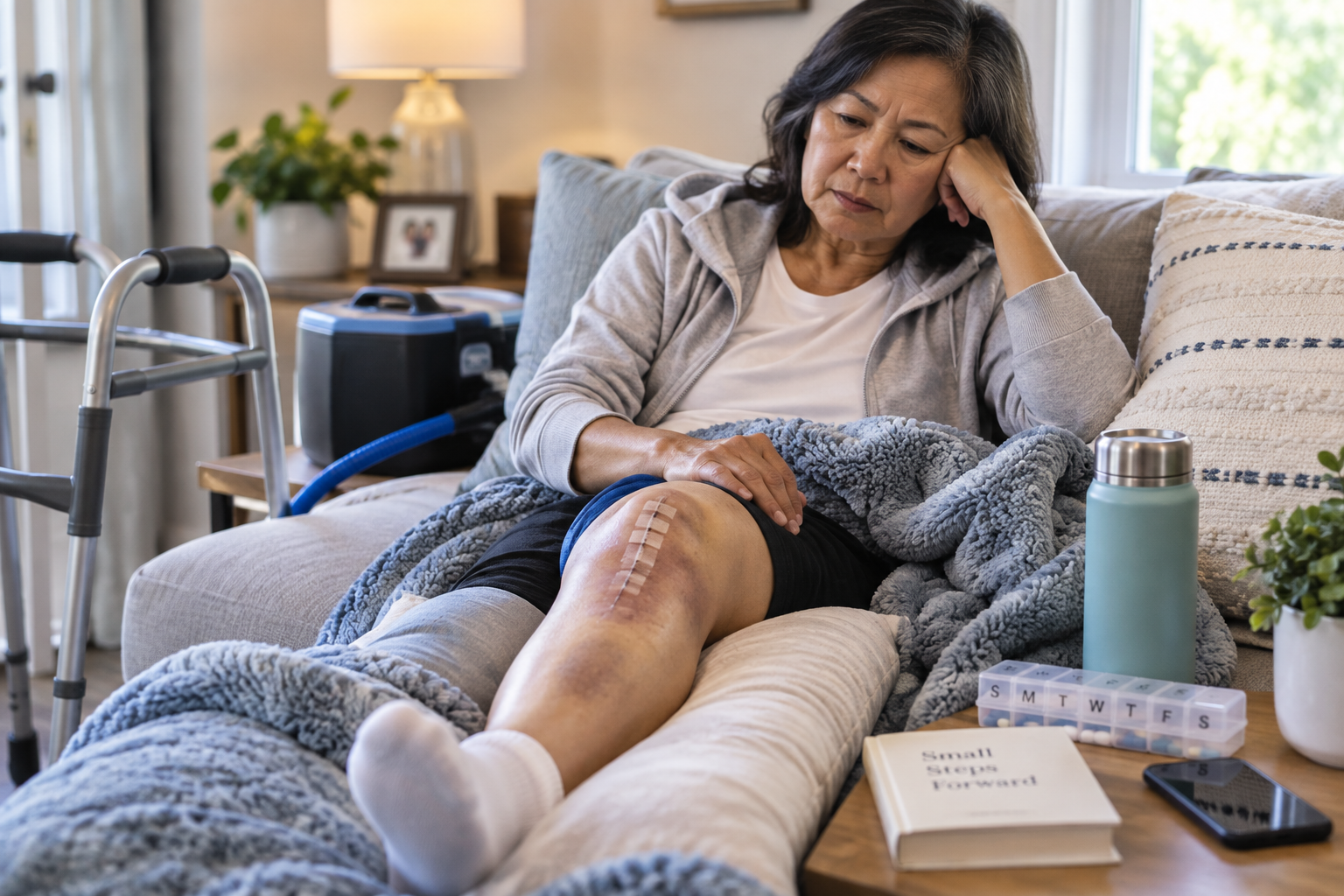
Pain after knee replacement can be one of the hardest parts of recovery to predict.
Some patients expect the pain to steadily improve every day after surgery. Instead, they may have a surprisingly manageable day followed by a much more uncomfortable one. Pain may increase at night, after physical therapy, after a busy day, or even after they thought they had turned a corner.
That doesn't necessarily mean something is wrong.
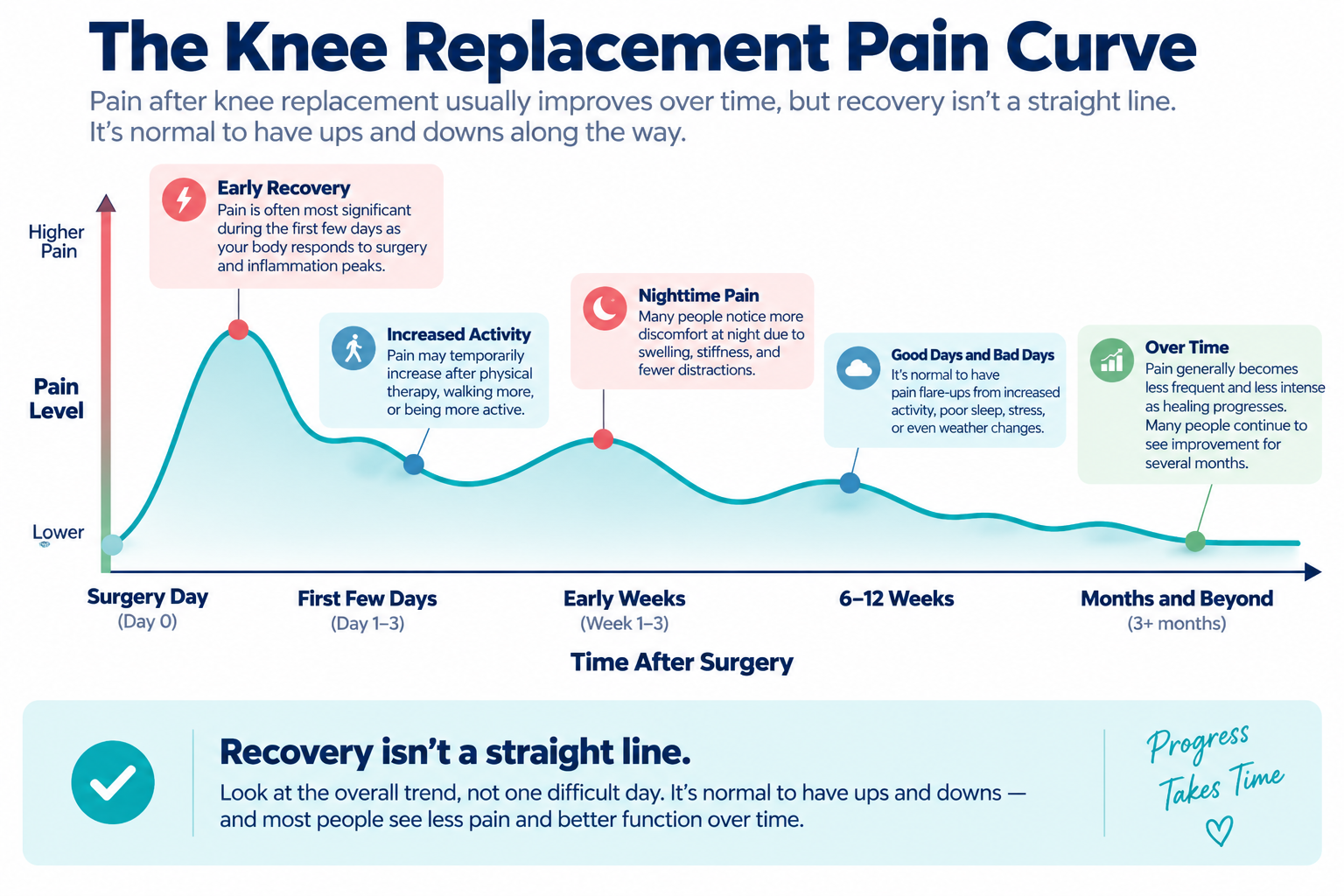
For most patients, knee replacement pain is most significant during the early postoperative period and gradually improves over the following weeks and months. But recovery rarely happens in a perfectly straight line.
Understanding how pain commonly changes can make those ups and downs a little less confusing.
When Is Pain Usually Worst After Knee Replacement?
The first several days after knee replacement can be quite uncomfortable, but exactly when pain feels worst varies.
Medications, anesthesia, and nerve blocks used around the time of surgery can temporarily reduce pain. Because of this, some patients are surprised when discomfort becomes more noticeable after they leave the hospital or surgery center.
At the same time, swelling and inflammation are developing around the surgical knee.
That combination can make the first few days particularly challenging, even if the knee initially felt better than expected.
The knee may feel achy, throbbing, tight, sore, burning, or simply very difficult to get comfortable.
Related: What to Expect the First 72 Hours After Knee Replacement →
How Long Does Pain Last After Knee Replacement?
There isn't a single date when knee replacement pain disappears.
During the first few weeks, pain and soreness can still be a significant part of recovery. Walking, rehabilitation, getting up from a chair, changing positions, or simply having a more active day can make the knee more uncomfortable.
As the weeks progress, many patients begin noticing an important change: pain becomes less constant.
You may still have uncomfortable periods, but there are increasingly longer stretches when the knee isn't demanding your attention.
By 6 to 12 weeks, many patients are considerably more comfortable than they were during the first few postoperative weeks. However, soreness, aching, stiffness, or activity-related discomfort can still occur.
Improvement can continue for many months after knee replacement, even after you've returned to many everyday activities.
The goal isn't necessarily for every sensation to disappear quickly. What matters more is that the overall trend gradually moves toward less pain and better function.
Why Can Knee Replacement Pain Be Worse at Night?
Nighttime pain is an extremely common complaint after knee replacement.
During the day, you're distracted by movement, appointments, conversations, meals, and everyday activities. At night, there are fewer distractions and discomfort can become much more noticeable.
Your knee may also be responding to everything you did during the day.
A busy day can contribute to increased swelling and soreness by evening. Then you lie still for longer periods, the knee begins feeling stiff, and finding a comfortable position becomes difficult.
This combination can make nighttime particularly frustrating.
Poor sleep can then make the following day feel harder—which is one reason sleep and pain can seem to feed into each other during early recovery.
Why Does My Knee Hurt More After Physical Therapy or Activity?
A recovering knee is being asked to do more while the tissues are still healing.
Walking farther, spending more time standing, completing rehabilitation, running errands, or returning to everyday activities can temporarily make the knee feel more sore.
Activity can also temporarily increase swelling, which may create additional pressure and tightness around the knee.
That doesn't mean every increase in pain should simply be ignored. But some fluctuation in soreness related to activity can occur during normal recovery.
The important pattern is what happens afterward and how your knee is progressing overall.
Related: How Long Does Swelling Last After Knee Replacement? →
Why Do I Have Good Days and Bad Days After Knee Replacement?
This is one of the most important things to understand about knee replacement recovery:
Progress is not perfectly linear.
You might wake up one morning feeling noticeably better, walk farther than usual, spend more time on your feet, and think you've finally turned a major corner.
Then the next day the knee is swollen, stiff, and sore again.
It's easy to interpret that as losing progress.
Often, however, the knee is simply responding to a change in activity.
Sleep, swelling, activity level, rehabilitation, time spent sitting or standing, and where you are in the healing process can all influence how the knee feels from one day to another.
Instead of judging recovery by a single difficult day, pay attention to the larger trend over time.
Related: What’s Normal After Knee Replacement? Common Symptoms & Warning Signs →
Can Swelling Make Knee Replacement Pain Worse?
Yes.
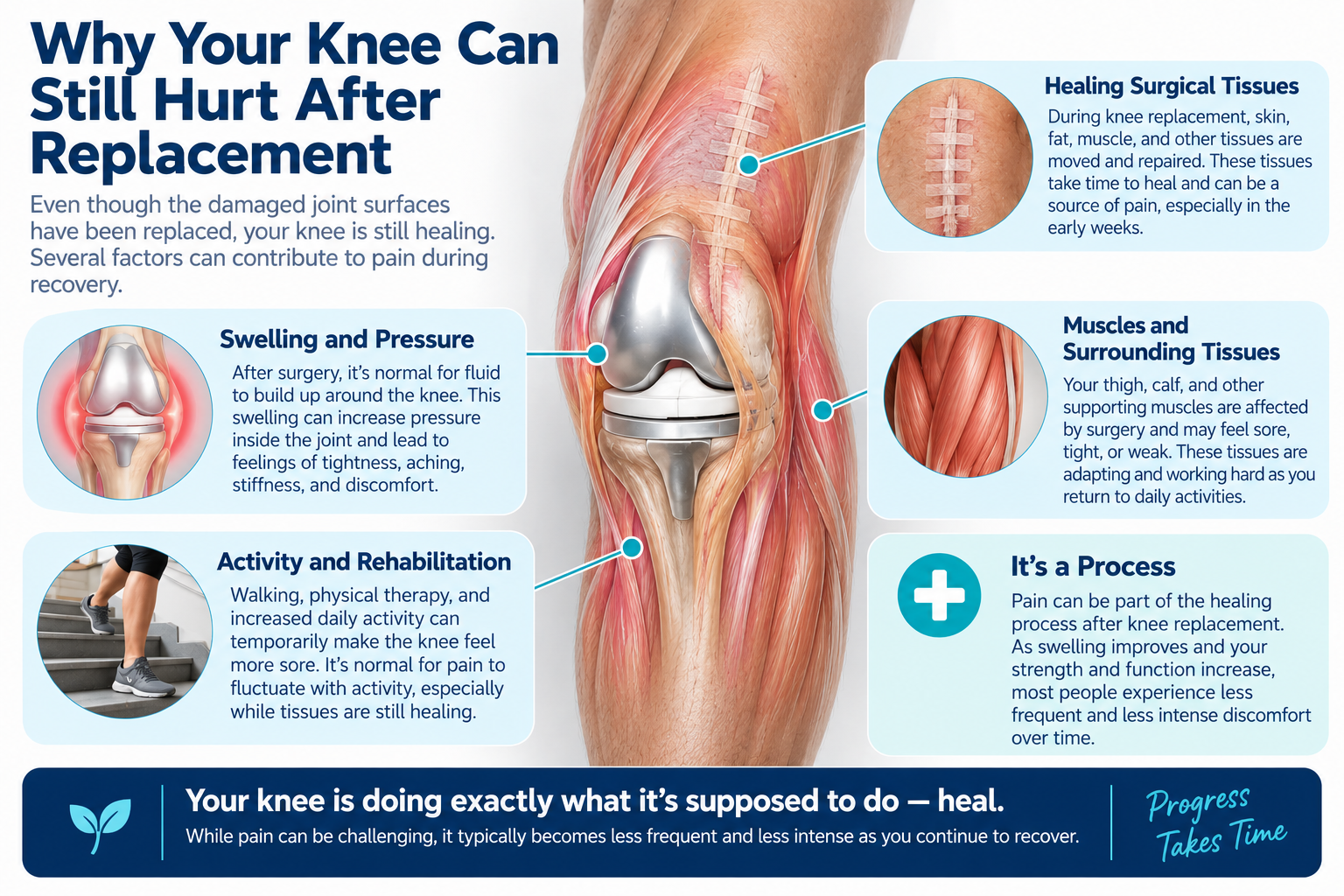
Swelling can contribute to pressure, tightness, stiffness, and discomfort around the knee.
That's one reason pain, swelling, and stiffness often seem to change together.
After a more active day, for example, you may notice more swelling that evening—and the knee may simultaneously feel tighter and more painful.
As swelling gradually improves and the knee becomes better able to tolerate everyday activity, these fluctuations often become less dramatic.
For more on this part of recovery:
Is Pain at 6 Weeks After Knee Replacement Normal?
It can be.
Six weeks can feel like a long time when you've been dealing with discomfort every day, but it's still relatively early in the overall recovery from a knee replacement.
Many patients are doing considerably more at six weeks than they were immediately after surgery, yet the knee may still become sore with rehabilitation, walking, stairs, prolonged standing, or increased activity.
Pain should generally be considered alongside the overall recovery pattern, rather than the calendar alone.
A knee that is gradually becoming more functional and comfortable is different from pain that is progressively worsening or significantly limiting recovery.
Is Pain at 3 Months After Knee Replacement Normal?
Some discomfort can still occur several months after surgery.
By three months, many patients have made substantial functional progress, but the knee may not yet feel completely normal.
Activity-related soreness, occasional aching, stiffness after sitting, or discomfort following a particularly demanding day can still occur.
Recovery also varies considerably between individuals.
What becomes increasingly important at this stage is whether you're seeing meaningful improvement over time.
If pain remains severe, is worsening, or is interfering substantially with your progress, discuss it with your surgeon or physical therapist rather than assuming you simply need to wait longer.
What Can Help With Pain After Knee Replacement?
Pain management after knee replacement is individualized, so your surgeon's instructions should guide your recovery.
Your healthcare team may use a combination of approaches that can include prescribed or over-the-counter medications when appropriate, activity modification, swelling management, positioning, ice or other strategies, and a gradually progressing rehabilitation program.
The key is not to expect one strategy to eliminate every uncomfortable sensation.
Pain management during recovery often involves balancing activity, rest, swelling, medication instructions, and rehabilitation as the knee gradually becomes more tolerant of everyday life.
Follow the specific recommendations provided by your surgeon and physical therapist.
When Should I Be Concerned About Pain After Knee Replacement?
Pain is expected after knee replacement, but not every change in pain should automatically be attributed to normal healing.
Contact your surgical team if you experience significant or rapidly worsening pain, particularly if it is accompanied by increasing redness, warmth, swelling, drainage, fever or chills.
New or significant calf pain or swelling also deserves prompt medical attention.
You should also contact your healthcare team if pain is preventing you from progressing as expected, becomes substantially worse after previously improving, or simply feels different enough that you're concerned.
Seek emergency medical care for symptoms such as new shortness of breath, chest pain, coughing up blood, fainting, or other severe or rapidly worsening symptoms.
Your surgeon's postoperative instructions should always take priority.
Knee Replacement Recovery Has Ups and Downs
One difficult day doesn't necessarily mean your knee replacement recovery is going backward.
Pain can change with activity, swelling, sleep, rehabilitation, and the normal healing process. Over time, what you're looking for is a larger shift toward less pain, better movement, and greater ability to return to everyday life.
And pain is only one part of that process.
The Post Op Ready Knee Replacement Bundle was created to help patients and families better understand what to expect with swelling, sleep, everyday activities, caregiver support, common recovery concerns, and the road back to everyday life.
Explore the Knee Replacement Bundle →
Preparing for Knee Replacement?
Start with our free Knee Replacement Checklist to help prepare your home and recovery plan before surgery.
