
Is Ice or Heat Better After Knee Replacement?
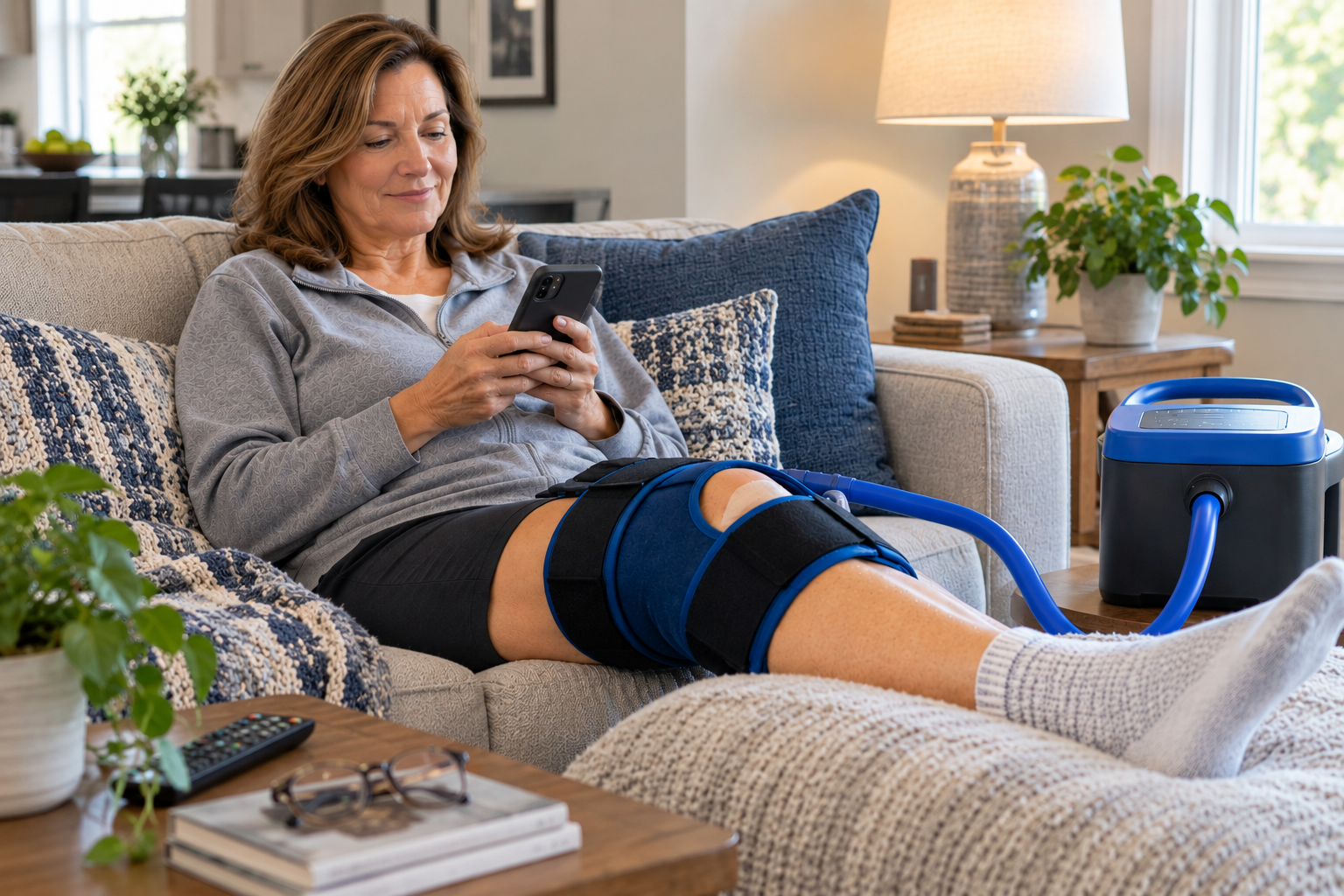
After knee replacement, it can seem like everyone has an opinion about what you should put on your knee.
Use ice. Try heat. Elevate it. Don't let it get too stiff.
So which is actually better?
During the early stages of knee replacement recovery, cold therapy is generally used more commonly than heat, particularly when swelling, warmth, and postoperative soreness are prominent. Heat may have a role later in recovery or for certain symptoms, but where and when you use it matters.
And there's another strategy that shouldn't be overlooked: elevation.
Understanding what each of these tools is intended to do can make it easier to know why your surgical team may recommend one over another.
Why Is Ice Commonly Used After Knee Replacement?
Knee replacement creates a significant inflammatory response.
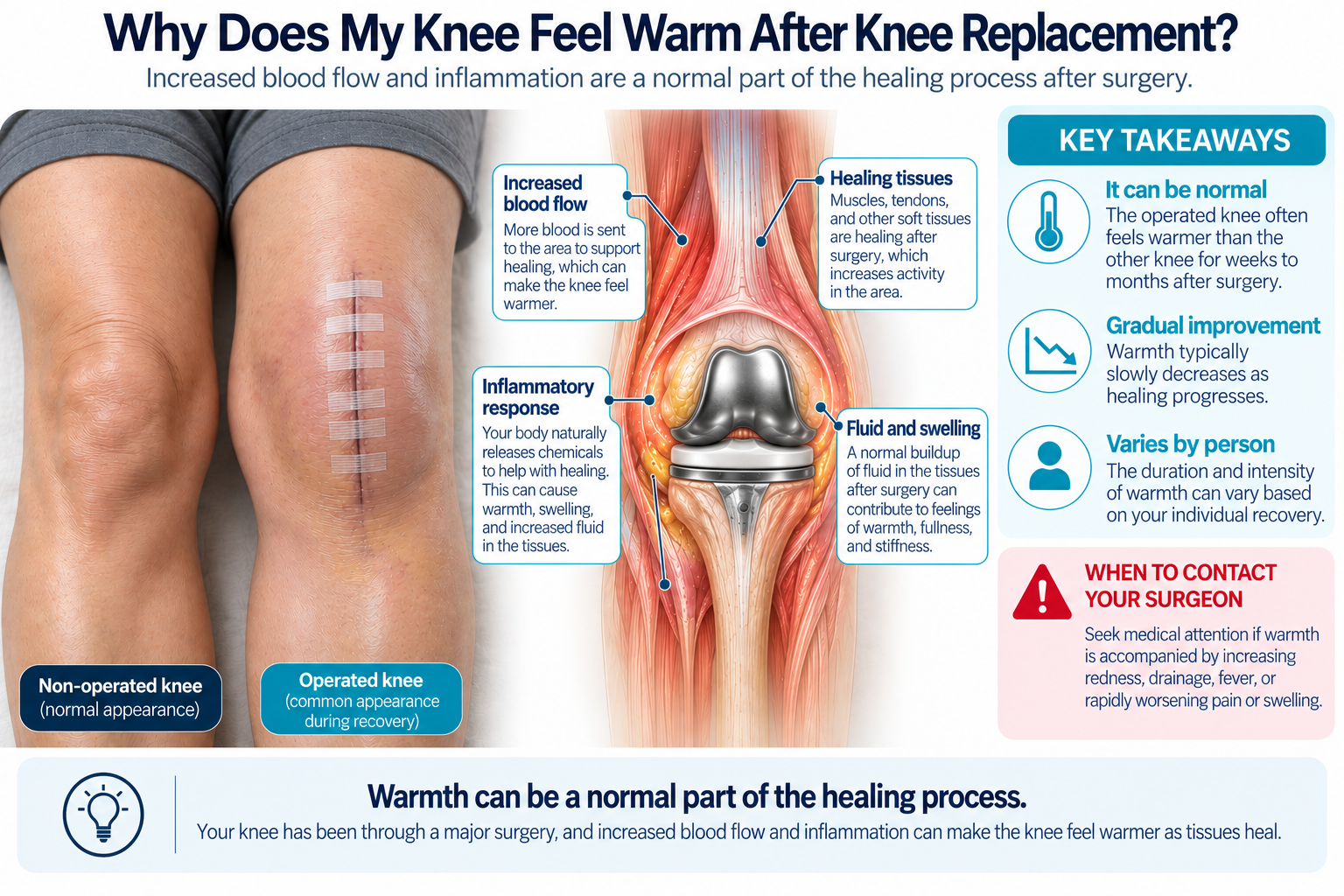
The tissues around the knee have been operated on, and fluid accumulates in and around the joint as the body begins healing. This contributes to the swelling, warmth, tightness, and soreness that are so common during early recovery.
Cold therapy can temporarily decrease pain and may help manage postoperative swelling and discomfort.
That's why you'll commonly see patients using an ice pack, reusable cold wrap, or cold-therapy machine during the early stages of knee replacement recovery.
The goal isn't to eliminate inflammation entirely—inflammation is part of the body's normal response to surgery.
Instead, cold therapy is generally used as one tool to help make symptoms more manageable while the knee heals.
Related: How Long Does Swelling Last After Knee Replacement? →
How Long Should You Ice Your Knee After Knee Replacement?
There isn't one universal icing schedule that applies to every knee replacement patient.
Your surgeon or physical therapist may provide specific instructions based on the type of cold therapy you're using, your skin sensation, your medical history, and where you are in recovery.
Traditional ice packs are generally used differently from cold-therapy machines designed to circulate chilled water around the knee.
That's important because advice such as “ice for exactly 20 minutes” shouldn't automatically be applied to every cooling device.
Follow the instructions provided by your surgical team and the manufacturer of the device you're using.
Whatever method you're using, cold therapy should not cause skin injury, excessive numbness, or other concerning skin changes.
Can You Ice Your Knee Too Much After Knee Replacement?
Yes, cold therapy isn't something that should simply be used indefinitely without considering the skin and tissues underneath it.
Prolonged or excessively cold exposure can potentially irritate or injure the skin.
This is particularly important after surgery because sensation around the knee may already be altered.
Some numbness around a knee replacement incision is common, which means you may not perceive temperature normally in every part of the knee.
Use an appropriate barrier when instructed, check your skin regularly, and follow the recommendations provided for your particular cooling method.
When Can You Use Heat After Knee Replacement?
This is where the answer becomes more nuanced.
Heat and cold don't simply represent “bad” versus “good.” They have different effects and may be used for different reasons.
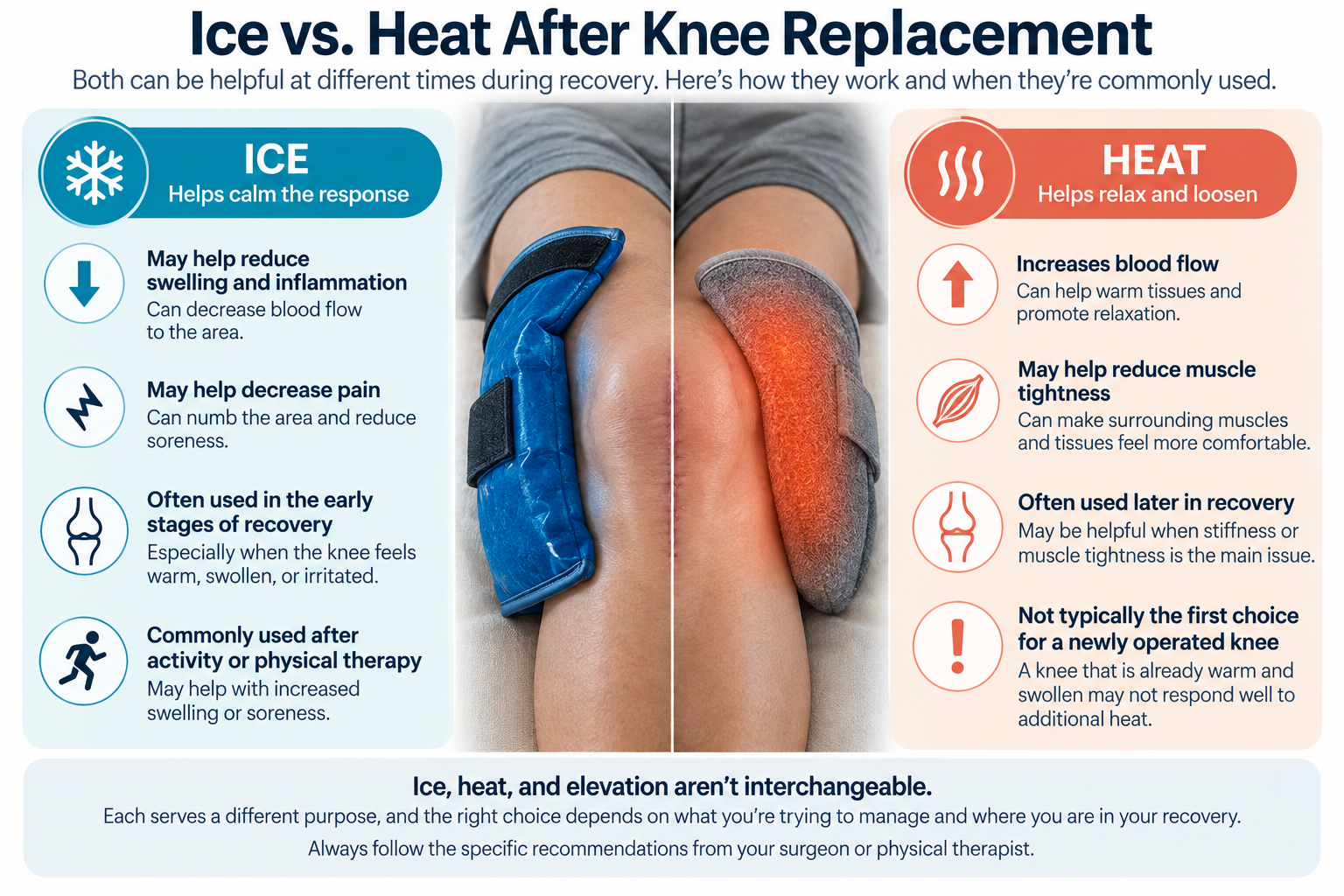
Heat can increase local circulation and may make stiff muscles or tissues feel more comfortable.
But a newly operated knee is already commonly warm and swollen, which is why applying additional heat directly over the surgical knee usually isn't the primary strategy during early recovery.
Later in recovery, there may be situations where your surgeon or physical therapist recommends heat for stiffness or surrounding muscle tightness.
The important distinction is that using heat on a recovering knee should be based on the symptom you're trying to address and your healthcare team's recommendations—not simply how many days have passed since surgery.
Can Heat Make Knee Replacement Swelling Worse?
Heat causes blood vessels near the skin to dilate and increases local blood flow.
Because of that, applying heat to an already hot, significantly swollen postoperative knee may not be the best choice for managing swelling.
That doesn't mean heat universally “causes swelling” or that it can never be used during knee replacement recovery.
It means that if your primary problem is a knee that is very warm, swollen, and irritated, adding heat directly to it may not accomplish what you're trying to achieve.
This is one reason cold therapy is generally used more commonly for early postoperative swelling and soreness.
Is Heat Helpful for Stiffness After Knee Replacement?
Sometimes—but stiffness after knee replacement is more complicated than simply having “tight muscles.”
Swelling itself can make the knee feel stiff.
After sitting or lying down for a while, the knee may also temporarily feel difficult to bend or straighten. Muscles surrounding the knee can become tight or sore as your walking and activity patterns change.
Later in recovery, heat may sometimes make surrounding muscles or tissues feel more comfortable before activity when recommended by your healthcare provider.
But heat isn't a substitute for the rehabilitation process, and it won't correct every cause of postoperative stiffness.
Related: How Long Does Stiffness Last After Knee Replacement? →
Should You Use Ice or Heat After Physical Therapy?
This depends on what you're experiencing and what your physical therapist recommends.
During the earlier stages of recovery, patients commonly notice that the knee feels warmer, more swollen, or more sore after rehabilitation or increased activity.
In that situation, cold therapy may be recommended to help manage symptoms afterward.
Heat may serve a different purpose—for example, your physical therapist may occasionally recommend it for muscle tightness or comfort at another stage of recovery.
Rather than thinking:
“Physical therapy = ice”
or
“Stiffness = heat,”
think about what symptom you're trying to manage and follow the plan established by your healthcare team.
Does Elevation Help After Knee Replacement?
Elevation can be useful for managing postoperative swelling.
When you're upright throughout the day, gravity can contribute to fluid collecting farther down the leg. That's one reason the knee, lower leg, ankle, or foot may look more swollen later in the day.
Positioning the leg appropriately while resting can help manage that fluid accumulation.
But with knee replacement, how you elevate matters.
Simply putting your foot on a low stool isn't necessarily the same thing as meaningfully elevating the leg.
And there's another positioning mistake we want to avoid.
What Is the Correct Way to Elevate Your Leg After Knee Replacement?
This is an area where your surgeon or physical therapist's instructions should take priority.
In general, when elevation is being used to help manage swelling, the leg needs to be sufficiently supported rather than simply dangling from the heel or resting on a low footstool.
For knee replacement patients, you also need to consider knee extension.
Placing a large pillow directly underneath the knee and leaving it bent for prolonged periods may feel comfortable, but repeatedly resting in a flexed position can work against regaining full knee extension.
When instructed to elevate, support is often placed along the lower leg rather than directly behind the knee, allowing the knee to remain relatively straight while the leg is elevated.
Your surgical team's positioning instructions should always take priority because individual circumstances can differ.
This is one of those small recovery details that can matter more than patients realize.
Is Ice Still Helpful 6 Weeks After Knee Replacement?
It can be.
There isn't a date when cold therapy suddenly stops being useful.
At six weeks, many patients are substantially more active than they were during the first week after surgery. That increased activity can still produce temporary soreness, warmth, or swelling.
Some patients therefore continue to find cold therapy helpful after rehabilitation or a particularly active day.
Others gradually find that they don't need it nearly as often.
The question becomes less:
“Am I still supposed to be icing?”
and more:
“Does cold therapy still help manage the symptoms I'm experiencing?”
If you're unsure, discuss it with your surgeon or physical therapist.
So, Is Ice or Heat Better After Knee Replacement?
For most patients, cold therapy plays the larger role during early knee replacement recovery, when swelling, warmth, and postoperative soreness are prominent.
Heat may have a role for certain symptoms or later stages of recovery, particularly when muscle tightness or stiffness is the issue—but it isn't automatically the opposite of ice.
And elevation remains another useful strategy for managing swelling when performed appropriately.
The bigger lesson is that ice, heat, and elevation aren't interchangeable.
Each serves a different purpose.
Your surgeon and physical therapist can help determine which strategies are appropriate for your specific recovery.
Understand What's Happening During Knee Replacement Recovery
Knowing whether to use ice or heat is only one of the many questions that can come up after knee replacement.
Swelling, stiffness, sleep, daily activities, positioning, caregiver support, and knowing what's normal can all become much bigger questions once you're actually home recovering.
The Post Op Ready Knee Replacement Bundle was created to help patients and families better understand what to expect throughout the recovery process.
Explore the Knee Replacement Bundle →
Preparing for Knee Replacement?
Start with our free Knee Replacement Checklist to help prepare your home and recovery plan before surgery.
