
How Long Does Swelling Last After Knee Replacement?

Swelling after knee replacement is expected, but it can last much longer than many patients realize. Learn when swelling typically peaks, how it changes over the first several weeks and months, and which symptoms deserve a call to your surgeon.
How Long Does Swelling Last After Knee Replacement?
Swelling after knee replacement can be surprisingly significant—and it often lasts longer than patients expect.
Your knee may look puffy, feel tight or warm, and become noticeably more swollen after you've been on your feet. You may even feel like the swelling is improving one day, only to see it return the next.
In most cases, some swelling is a normal part of recovering from knee replacement. Understanding why it happens, how long it can last, and which changes deserve a call to your healthcare team can make this part of recovery much less confusing.
Why Does Swelling Happen After Knee Replacement?
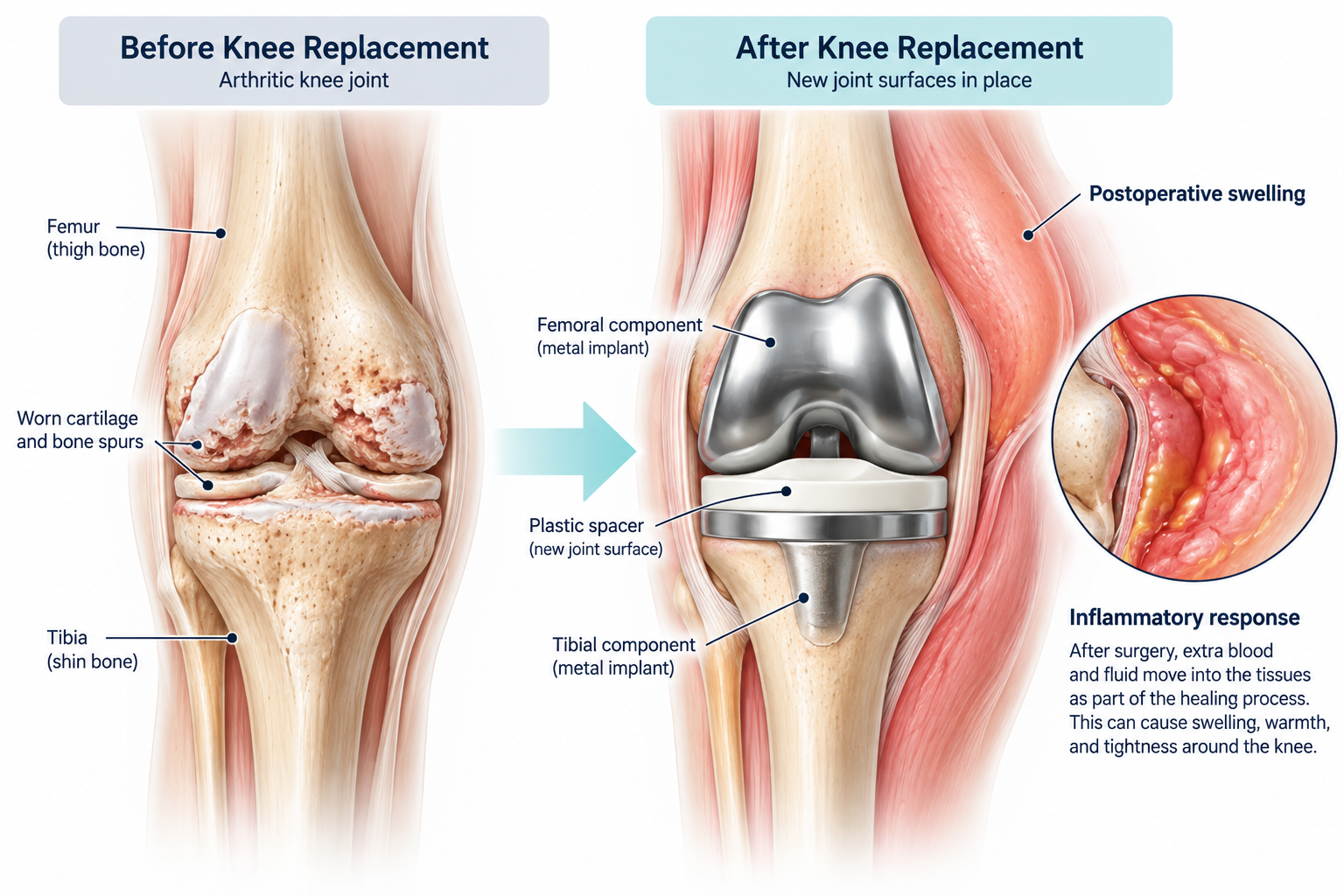
A knee replacement is a major surgery.
During the procedure, your surgeon works through multiple layers of tissue to reach the knee joint. The damaged joint surfaces are prepared, portions of bone are reshaped, and the knee replacement components are positioned.
Your body responds to this surgical trauma with inflammation and increased fluid in the area as the healing process begins.
That's why the knee can feel swollen, warm, tight, heavy, or stiff after surgery. Swelling can also extend beyond the knee and into the lower leg, ankle, or foot.
Although it can look dramatic, swelling by itself doesn't necessarily mean something is wrong.
Bruising can follow a similar pattern and may appear surprisingly far from the knee. Learn about bruising after knee replacement →
When Does Swelling Peak After Knee Replacement?
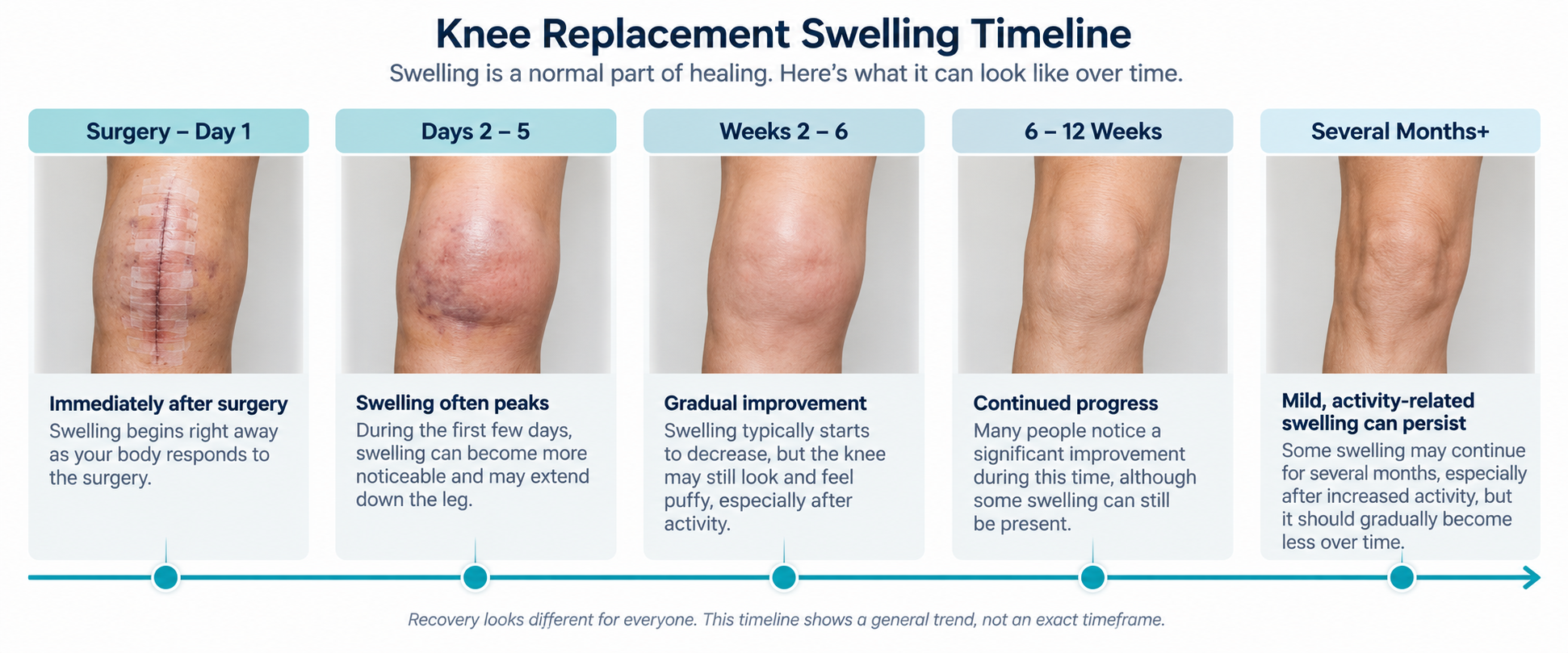
Swelling is often most noticeable during the first several days after surgery.
In fact, some patients are surprised when their knee or leg appears more swollen a few days after surgery than it did immediately afterward.
Bruising may become more noticeable during this time as well, sometimes traveling down the lower leg toward the ankle and foot.
This early swelling is part of your body's response to surgery and should gradually begin settling as recovery progresses.
Related: What to Expect the First 72 Hours After Knee Replacement →
How Long Does Knee Replacement Swelling Last?
There isn't one exact timeline that applies to everyone.
Swelling is usually a prominent part of the first few weeks of knee replacement recovery. As healing progresses, it should generally become less significant—but it doesn't always improve in a perfectly straight line.
You may notice that your knee looks better for several days and then becomes more swollen after increasing your activity.
By six to twelve weeks, many patients notice a considerable improvement compared with the early postoperative period. However, that doesn't mean all swelling has to be gone.
Some degree of swelling can continue for several months after knee replacement, particularly after more active days.
The important thing is usually the overall trend: swelling should gradually become less prominent as recovery progresses.
Why Does My Knee Swell More Later in the Day?
This is a very common experience after knee replacement.
You might wake up and think your knee finally looks less swollen, only to find it noticeably puffier again by the afternoon or evening.
Throughout the day, you're spending more time sitting upright, standing, walking, exercising, and completing normal activities. Gravity and increased activity can contribute to more fluid accumulating around the knee and lower leg.
That's why postoperative swelling can often be less noticeable in the morning and more noticeable later in the day.
As your knee continues healing, these fluctuations generally become less dramatic.
Can Swelling Make My Knee Feel Stiff?
Yes.
Extra fluid around the knee can create a sensation of pressure, fullness, or tightness and make bending or straightening the knee feel more difficult.
That's one reason your knee may move differently at different times of the day.
A knee that feels relatively loose in the morning may feel considerably tighter after you've been up and moving around.
This can be frustrating, but day-to-day changes in stiffness don't necessarily mean you've lost your recovery progress.
What Can Help With Swelling After Knee Replacement?
Your surgeon and physical therapist may recommend strategies such as appropriate elevation, cold therapy, compression when indicated, gentle movement, and balancing activity with recovery.
The appropriate approach can depend on your stage of recovery, medical history, and your surgeon's specific instructions.
And this is where swelling can become a little more complicated than simply trying to “get rid of it.”
How you position your leg, how swelling changes with activity, when compression may be appropriate, and what your swelling may be telling you about your current activity level are all useful things to understand as recovery progresses.
Not sure when to use cold versus heat?
Learn more about ice and heat after knee replacement →
When Should I Be Concerned About Swelling After Knee Replacement?
Although swelling is expected after knee replacement, a significant or sudden change shouldn't automatically be assumed to be normal.
Contact your surgeon or healthcare team if you develop concerning symptoms such as:
Rapidly increasing or severe swelling
A sudden significant increase after swelling had been improving
Increasing redness around the knee or incision
Fever or chills
Concerning drainage or changes around the incision
Significant or worsening calf pain or tenderness
New or significant one-sided calf or leg swelling
Increasing pain that seems unusual or out of proportion to your recent activity
Seek emergency medical attention for symptoms such as new shortness of breath, chest pain, coughing up blood, or fainting, as these can potentially indicate a serious complication.
When you're unsure whether a change is expected, contact your surgical team.
Related: What’s Normal After Knee Replacement? Common Symptoms & Warning Signs →
Is Swelling at 6 Weeks—or Even Several Months—Normal?
It can be.
Six weeks may feel like a long time when you've been dealing with the knee every day, but you're still relatively early in recovery from a major joint replacement.
Your knee does not necessarily need to be completely free of swelling by six weeks.
Even several months after surgery, some patients continue to notice mild swelling—especially after increased walking, exercise, work, travel, or particularly active days.
Over time, you'd generally expect swelling to become less prominent as the knee continues to heal.
Want to Better Understand Your Swelling Throughout Recovery?
Knowing that swelling can be normal doesn't always answer the questions that come up once you're actually living through recovery:
Why did my knee suddenly swell more today?
How should I position my leg?
Am I doing too much?
Why does swelling make my knee so difficult to bend?
What should the swelling trend look like as I recover?
That's where the Post Op Ready Knee Replacement Swelling Guide goes deeper.
It was created to help you understand how swelling changes throughout recovery, why it fluctuates, how it can affect the way your knee feels and moves, and how to better navigate swelling as your activity gradually increases.
Explore the Knee Replacement Swelling Guide →
Looking for Help With More Than Swelling?
Swelling is only one part of knee replacement recovery.
The Post Op Ready Knee Replacement Bundle brings together our recovery resources covering the questions patients commonly encounter before and after surgery—from sleep and swelling to everyday activities, caregiver support, common recovery concerns, and returning to life.
Explore the Knee Replacement Bundle →
Still preparing for surgery? Download the free Post Op Ready Knee Replacement Checklist to help you prepare your home and recovery plan before surgery.
