
What Should You Eat After Knee Replacement Surgery?

Eating probably isn't the first thing that comes to mind when you're preparing for knee replacement. But once you're home recovering, food can become surprisingly complicated.
You may be tired, taking medications, dealing with constipation or nausea, and have very little interest in standing in the kitchen preparing a meal. At the same time, your body needs adequate nutrition while it heals and you begin becoming active again.
The good news is that eating well after knee replacement doesn't require a “perfect” diet.
A few basic priorities can help you understand what your body needs during recovery—and why preparing ahead of time can make the first few weeks at home much easier.
Why Does Nutrition Matter After Knee Replacement?
Knee replacement is a major surgery.
Your body is repairing an incision and deeper surgical tissues while also adapting to changes in activity. At the same time, many patients are temporarily moving less than usual while their bodies are demanding resources for recovery.
Food provides the energy and nutrients needed to support those processes.
Rather than focusing on a special “knee replacement diet,” it can be more helpful to think about several broad priorities:
adequate nutrition, protein, hydration, and foods that your stomach tolerates well.
Your individual nutritional needs may be different if you have diabetes, kidney disease, gastrointestinal conditions, dietary restrictions, or other medical considerations, so specific recommendations should come from your healthcare team.
Why Is Protein Important After Knee Replacement?
Protein provides amino acids that the body uses to maintain and repair tissues.
That's particularly relevant after surgery, when your body is healing while your activity level may temporarily be reduced.
Protein also plays a role in maintaining muscle mass—something worth considering when you're temporarily walking less, using an assistive device, or simply spending more time resting than you normally would.
You don't necessarily need supplements or a complicated nutrition program to get protein after surgery. Many everyday foods contain it.
The bigger goal is simply to make protein a regular part of your overall nutrition during recovery, unless you've been given different dietary instructions by your healthcare provider.
What If I Don't Feel Hungry After Knee Replacement?
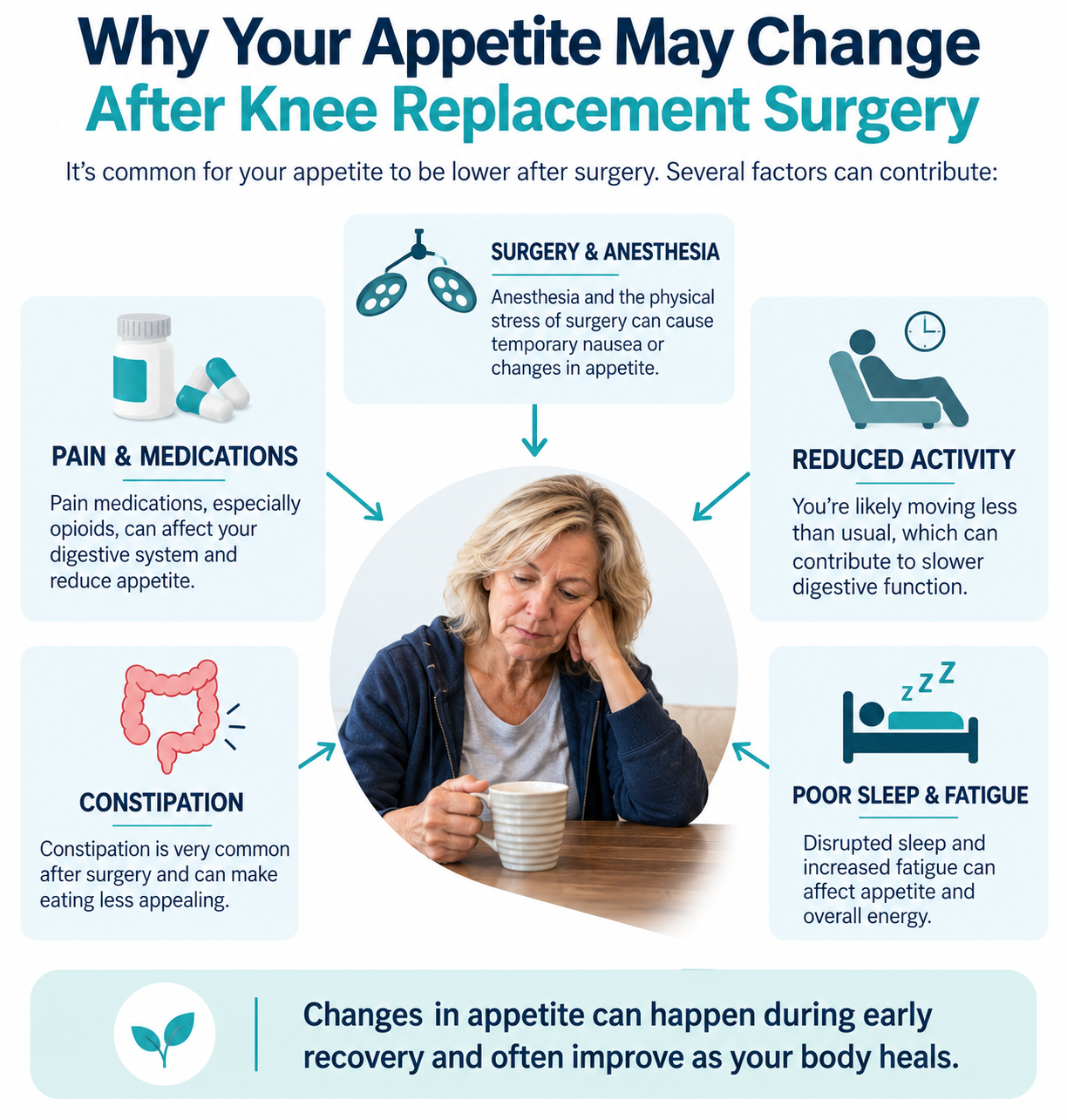
A reduced appetite isn't unusual during the early postoperative period.
Anesthesia, pain, medications, constipation, nausea, disrupted sleep, and the general physical stress of surgery can all affect how interested you are in food.
And sometimes a normal-sized meal simply sounds overwhelming.
If your appetite is low, smaller amounts of food may feel more manageable than trying to force yourself through a large meal.
The important thing is to pay attention to the overall trend. Appetite often begins to improve as the effects of surgery and medications settle.
If you're unable to eat or drink adequately, are repeatedly vomiting, or your appetite remains significantly reduced, contact your healthcare team.
Related: What to Expect the First 72 Hours After Knee Replacement →
Why Is Constipation So Common After Knee Replacement?
Constipation is an extremely common issue after surgery.
Several things can contribute at the same time:
Certain pain medications can slow the digestive system.
You're often moving much less than usual.
Your eating and drinking patterns may change.
Surgery and anesthesia can temporarily affect normal bowel function.
Hydration and adequate dietary fiber are commonly part of maintaining normal bowel function, but your postoperative instructions matter.
Some patients are also prescribed or advised to use medications specifically to help prevent or manage constipation.
If constipation becomes significant, painful, persistent, or is accompanied by concerning abdominal symptoms, contact your healthcare provider rather than trying to manage it entirely through diet.
How Long Does Pain Last After Knee Replacement? →
How Important Is Hydration After Knee Replacement?
Hydration is another easy thing to overlook when you're spending most of the day resting.
Fluids support normal body function and can be particularly important when your activity, appetite, and bowel habits have changed after surgery.
Instead of waiting until you're extremely thirsty, it may be helpful to keep fluids accessible throughout the day.
However, fluid recommendations aren't identical for everyone. Patients with certain heart, kidney, or other medical conditions may have specific restrictions, so follow your healthcare team's recommendations.
Are There Foods You Should Avoid After Knee Replacement?
For most patients, there isn't a universal list of foods that must be eliminated simply because they've had a knee replacement.
What's appropriate depends on your normal diet, medical conditions, medications, appetite, and any instructions you've received from your surgical team.
During the early days, you may simply find that some foods are easier to tolerate than others—especially if you're experiencing nausea or poor appetite.
It's also worth remembering that supplements and “natural” products aren't automatically harmless after surgery. Some can interact with medications or affect bleeding.
If you're considering starting a new supplement during recovery, check with your healthcare team first.
Should You Prepare Food Before Knee Replacement Surgery?
This is one of the most useful things you can do before surgery.
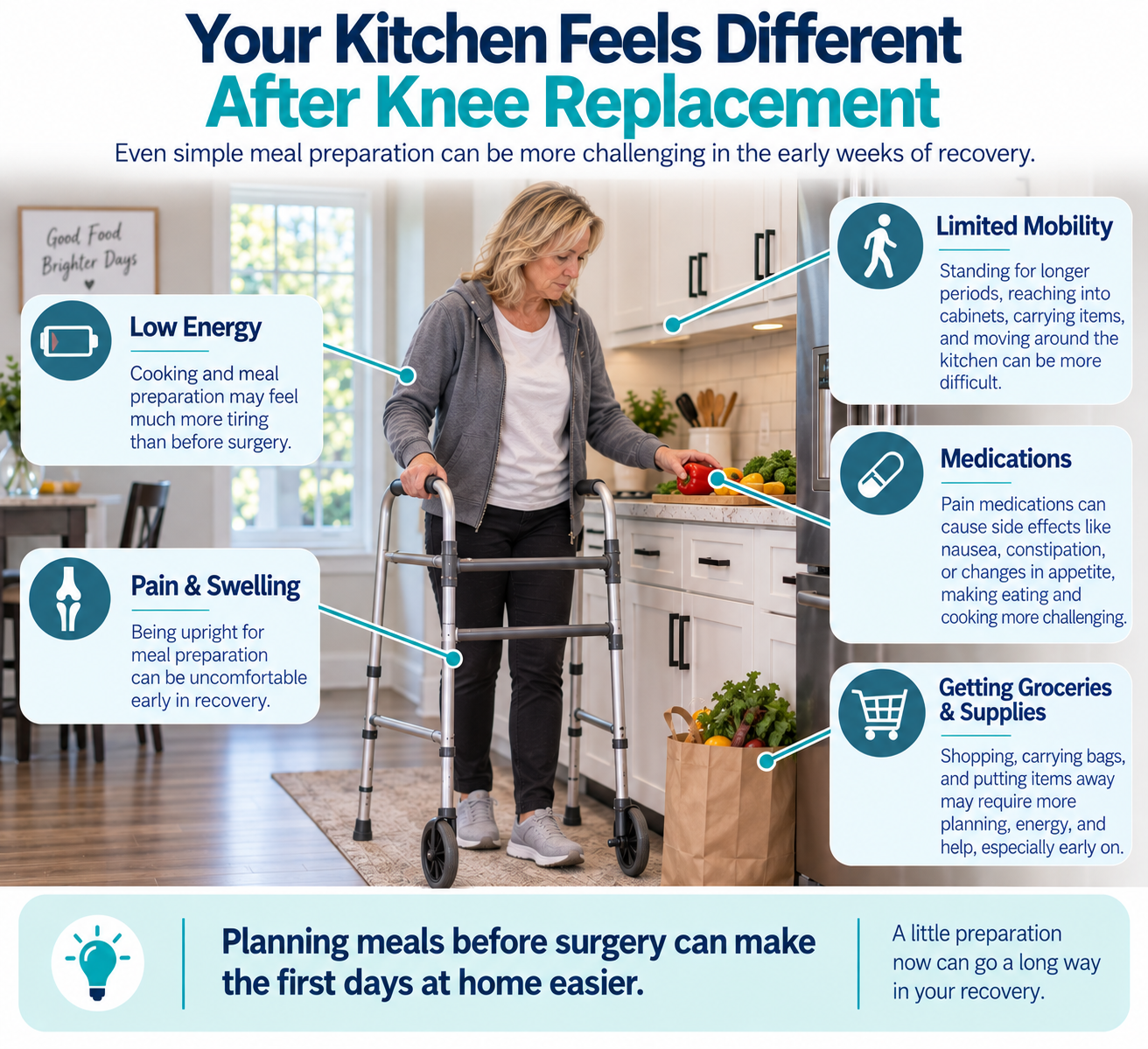
During the first several days at home, even ordinary tasks can require considerably more energy than you expect.
Standing in the kitchen, carrying groceries, reaching into low cabinets, repeatedly walking between rooms, and cleaning up afterward may not sound difficult now—but they can feel very different immediately after knee replacement.
Having food already available can remove one more task from your recovery day.
You don't need to prepare for every possible scenario. The goal is simply to think ahead about how you'll access meals when your mobility, energy, and appetite may all be temporarily different.
If someone will be helping you after surgery, this is also a good conversation to have with them beforehand.
What Makes a Good Meal During Knee Replacement Recovery?
There isn't one perfect postoperative meal.
Generally, you want meals that help you get adequate nutrition without making eating unnecessarily difficult during a time when your energy may be limited.
That might mean thinking about:
whether the meal provides meaningful nutrition
whether you can tolerate it with your current appetite
whether it requires significant preparation
whether you can safely access and prepare it with your current mobility
whether it fits any medical or dietary restrictions you have
This is where planning before surgery can make a significant difference.
The question isn't just:
“What foods are healthy?”
It's also:
“What am I realistically going to be able—and willing—to eat when I get home?”
Do You Need a Special Diet After Knee Replacement?
Usually, knee replacement itself doesn't require a special branded or highly restrictive diet.
For many patients, the priorities are much simpler: eat enough, include nutrient-dense foods, get adequate protein and fluids, and choose foods you tolerate well.
Your healthcare team may give you additional instructions based on your medications or medical history.
And if you have a condition that already requires a specific diet, your established medical recommendations don't disappear just because you've had surgery.
Planning Ahead Can Make Eating Much Easier
Nutrition after knee replacement doesn't need to become another complicated recovery project.
But it does deserve some thought before surgery.
Your appetite may change. Your energy will probably be lower. Grocery shopping and cooking may temporarily be harder. Constipation or nausea may affect what sounds appealing.
Having a plan means you don't have to solve all of those problems when you're already tired and recovering.
And that's really the goal:
not perfect eating—prepared eating.
Take the Guesswork Out of Meals After Knee Replacement
Knowing that protein, hydration, balanced nutrition, and planning ahead matter is one thing.
Figuring out what to buy, what to prepare, and how to make meals easier once you're actually home recovering is another.
The Post Op Ready Knee Replacement Nutrition & Meal Prep Guide was created to help patients prepare for that part of recovery before surgery—so fewer decisions have to be made when energy and mobility are limited.
Explore the Knee Replacement Nutrition & Meal Prep Guide →
Want Help With the Rest of Knee Replacement Recovery?
The Post Op Ready Knee Replacement Bundle brings together practical education about the different parts of recovery patients and caregivers often have questions about.
Explore the Knee Replacement Bundle →
Preparing for Knee Replacement?
Start with our free Knee Replacement Checklist to help you prepare your home and recovery plan before surgery.
