
Is Bruising Normal After Knee Replacement?
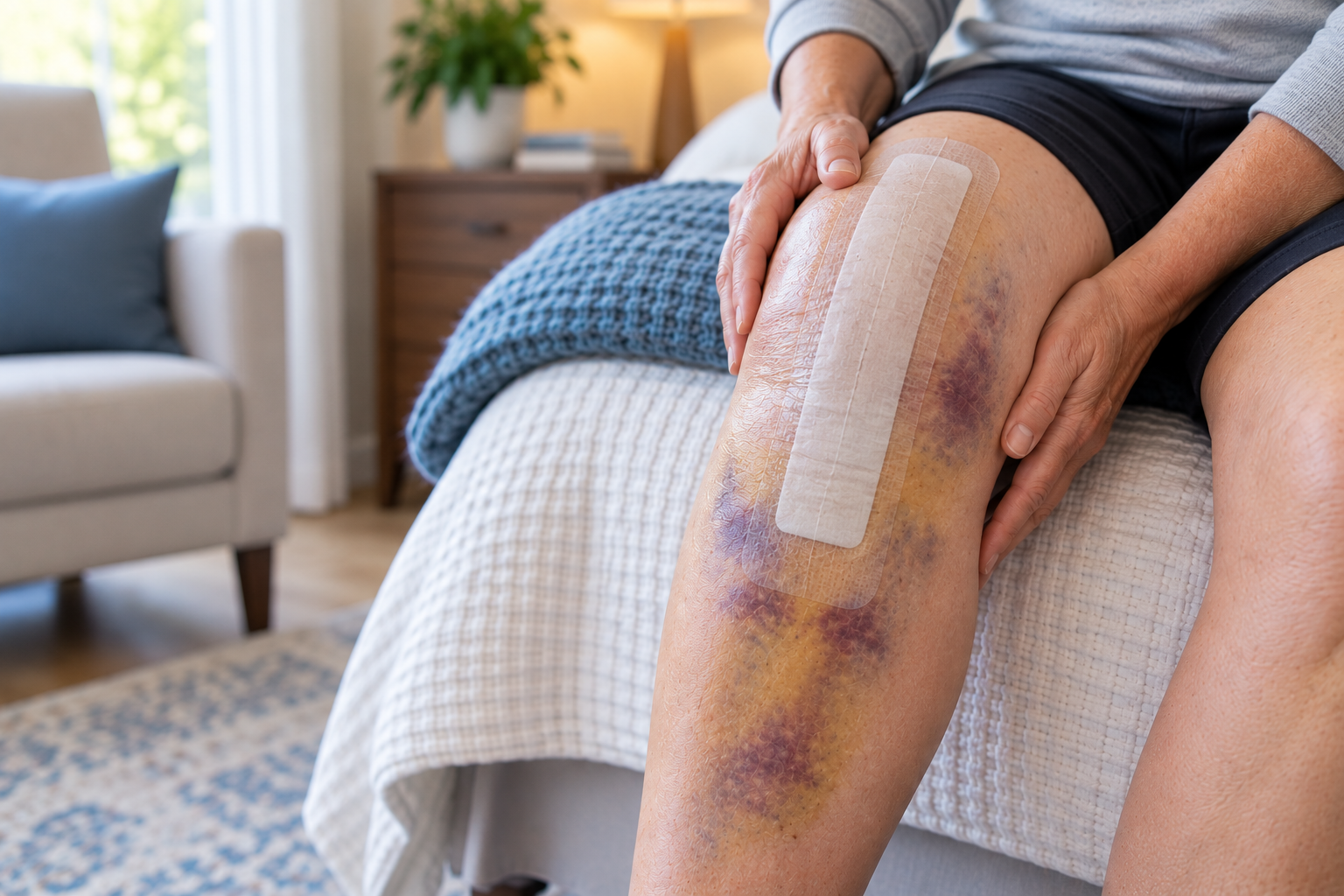
Seeing significant bruising after knee replacement can be surprising. Purple, blue, green, or yellow discoloration may appear around the knee—and sometimes much farther down the leg than patients expect.
Bruising is common after knee replacement surgery, although the amount and location can vary considerably from person to person.
Some patients develop only mild discoloration near the knee. Others may notice extensive bruising along the thigh, calf, ankle, or even the foot.
So why does it happen, how long does it last, and when should bruising be checked?
Why Does Bruising Happen After Knee Replacement?
Knee replacement is a major operation involving the skin, soft tissues, bone, and blood vessels around the knee.
During and after surgery, small amounts of blood can collect within the surrounding tissues. That blood becomes visible beneath the skin as bruising.
The amount of bruising can be influenced by several factors, including the surgery itself, individual differences in bleeding and bruising, and medications that affect clotting.
This is why two people who had similar knee replacements can have very different-looking legs afterward.
When Does Bruising Appear After Knee Replacement?
Bruising isn't always at its worst immediately after surgery.
It may become more noticeable over the first several days as blood within the tissues becomes visible beneath the skin.
That means someone may leave the hospital with relatively little discoloration and notice considerably more bruising after returning home.
New bruising appearing several days after surgery does not automatically mean something has gone wrong.
What matters is the overall pattern and whether other concerning symptoms are developing with it.
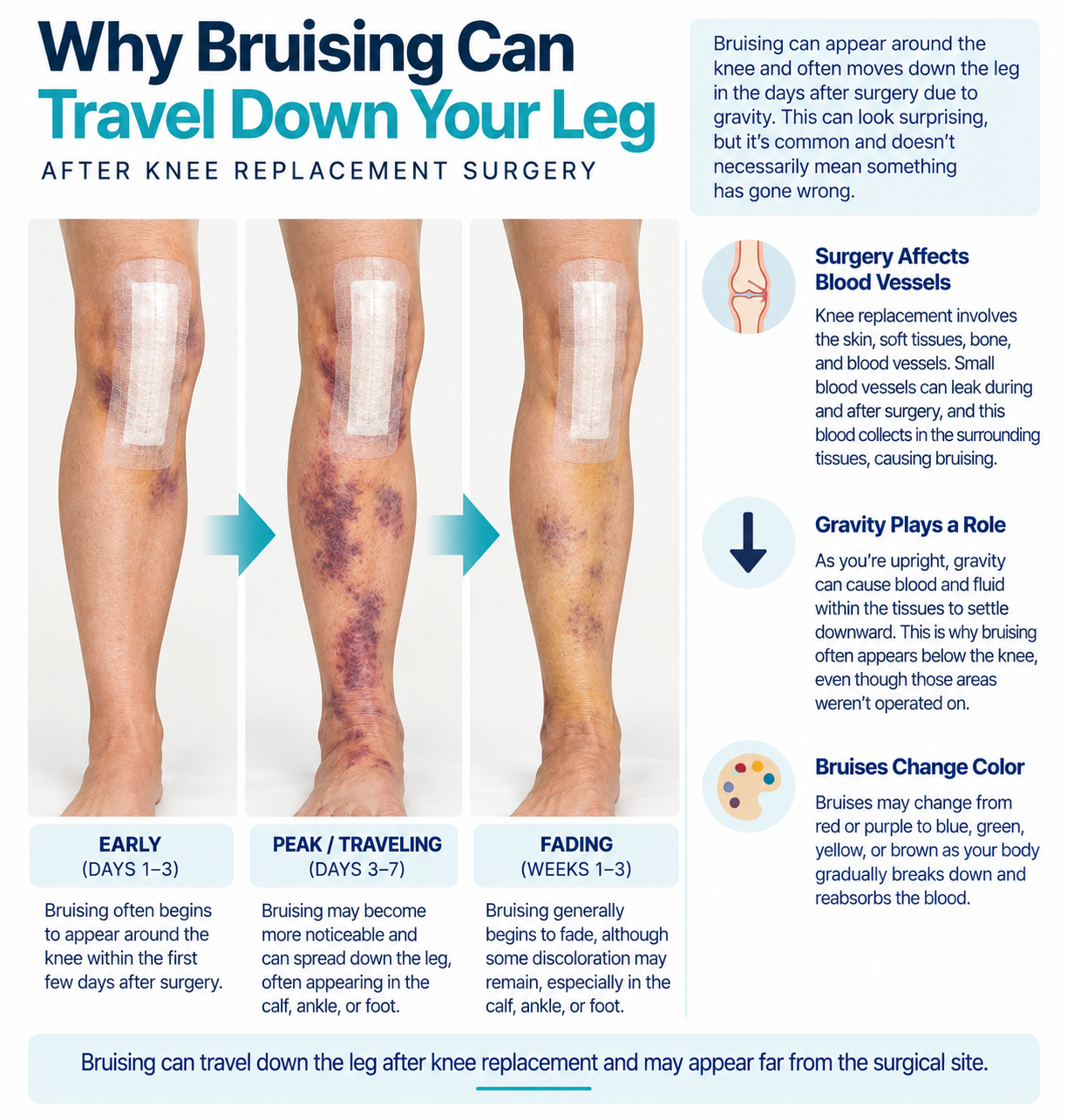
Why Is My Bruising Moving Down My Leg?
This is one of the most surprising parts of knee replacement recovery.
Bruising that begins around the surgical area can gradually appear lower in the leg.
Gravity can contribute to blood and fluid within the tissues settling downward while you're upright. As a result, discoloration may eventually become visible along the calf, ankle, or foot—even though those areas weren't operated on.
So the location of a bruise doesn't necessarily identify where the bleeding originally occurred.
This same downward movement of fluid is one reason swelling can become noticeable below the knee as well. Learn how long swelling lasts after knee replacement →
Why Does Bruising Change Colors?
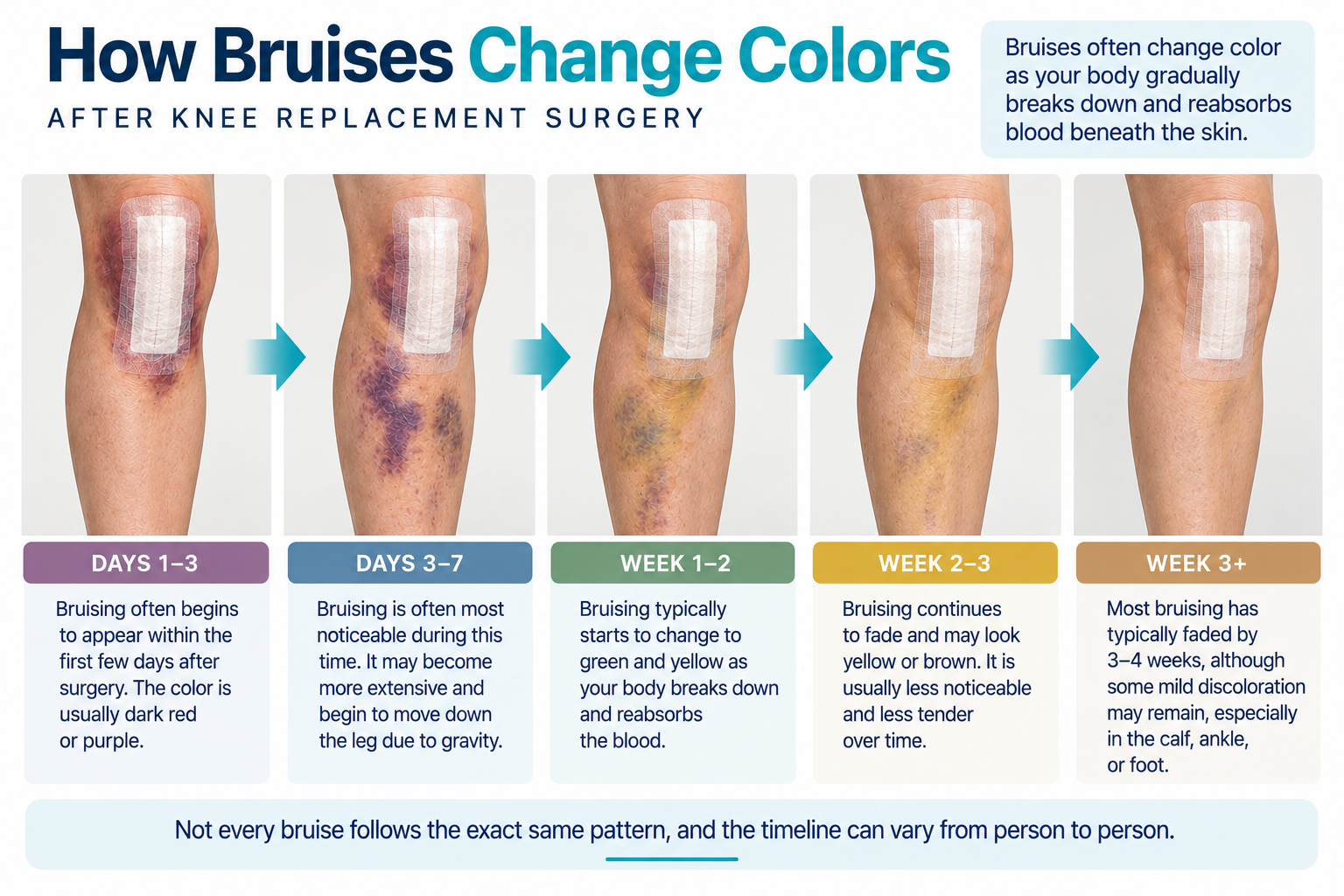
Bruises often change appearance as the body gradually breaks down and reabsorbs blood that has collected beneath the skin.
A bruise may progress through shades of:
dark red or purple → blue → green/yellow → brown or lighter discoloration
Not every bruise follows the exact same sequence.
More important than a particular color is the overall trend: uncomplicated bruising should generally become less prominent over time rather than progressively worsening.
How Long Does Bruising Last After Knee Replacement?
There isn't one exact timeline.
For many patients, bruising is most noticeable during the early postoperative period and gradually fades over the following weeks.
Larger or more extensive areas of bruising may take longer to disappear completely.
It's also possible for different areas of the leg to look like they're at different stages. One area may already be fading while discoloration farther down the leg has only recently become noticeable.
Like swelling and pain, bruising doesn't necessarily improve at the exact same rate every day.
Bruising may be fading even while pain and soreness are still changing. Learn how long pain lasts after knee replacement →
Why Do Some People Bruise Much More Than Others?
The appearance of bruising after knee replacement varies dramatically.
Factors that may influence it include:
individual tendency to bruise
medications that affect bleeding or clotting
the extent of bleeding within the tissues
differences in the operation and immediate postoperative course
Someone with dramatic bruising has not necessarily had a worse surgery or a worse recovery than someone with very little bruising.
However, patients taking anticoagulants or other medications that affect bleeding should follow their surgical team's instructions and contact them with concerns about unexpected or excessive bruising.
When Should Bruising After Knee Replacement Be Concerning?
Bruising alone is different from bruising accompanied by other significant changes.
Contact your surgical team if you develop rapidly expanding or unusually severe bruising, significant worsening pain or swelling, persistent bleeding or drainage, or another change that concerns you.
A very firm, painful, enlarging area can sometimes represent a collection of blood called a hematoma and should be evaluated.
Symptoms such as new calf pain or tenderness, substantial one-sided swelling, chest pain, or shortness of breath also deserve prompt medical attention because postoperative blood clots are a separate concern and cannot be ruled out simply by the appearance of the bruising.
Learn more about normal vs. concerning symptoms after knee replacement →
Bruising Can Look Worse Than Patients Expect
One of the difficult parts of early knee replacement recovery is that the leg can sometimes look worse before it looks better.
Bruising may become darker, spread farther down the leg, or change colors even while other parts of recovery are progressing.
Rather than judging recovery by the appearance of a bruise alone, pay attention to the overall trend and any symptoms occurring along with it.
When something changes suddenly or simply doesn't seem right, your surgical team is the appropriate place to check.
Preparing for Knee Replacement Recovery?
Bruising is only one of the unexpected things patients encounter after surgery. The Post Op Ready Knee Replacement Bundle was created to help patients and caregivers understand what recovery can actually look like—from the first days at home through the weeks and months that follow.
Explore the Knee Replacement Bundle →
Just Getting Started?
Use the free Knee Replacement Checklist to start preparing for surgery and the first phase of recovery.
