
How Do You Mentally Prepare for Knee Replacement Surgery?

Preparing for knee replacement usually involves plenty of practical decisions—appointments, equipment, transportation, medications, and getting your home ready.
But there's another part of preparation that's easy to overlook:
What is recovery actually going to feel like?
You don't need to go into surgery expecting the worst. But having realistic expectations can make some of the difficult parts of recovery feel much less surprising.
Mental preparation isn't about convincing yourself that recovery will be easy. It's about understanding that some challenging days are part of the process—and they don't necessarily mean something is going wrong.
Expect Recovery to Feel Like a Big Adjustment
Even when you've been planning your knee replacement for months, the first few days afterward can still be a shock.
Suddenly, normal activities require more thought. You're using a walker. Your knee is swollen and sore. Sleep may be disrupted. Your normal routine has temporarily changed.
Knowing beforehand that this adjustment period exists can help you put those early experiences into perspective.
You're not supposed to feel completely recovered when you arrive home.
Related: What to Expect the First 72 Hours After Knee Replacement →
Don't Expect Every Day to Be Better Than the Last
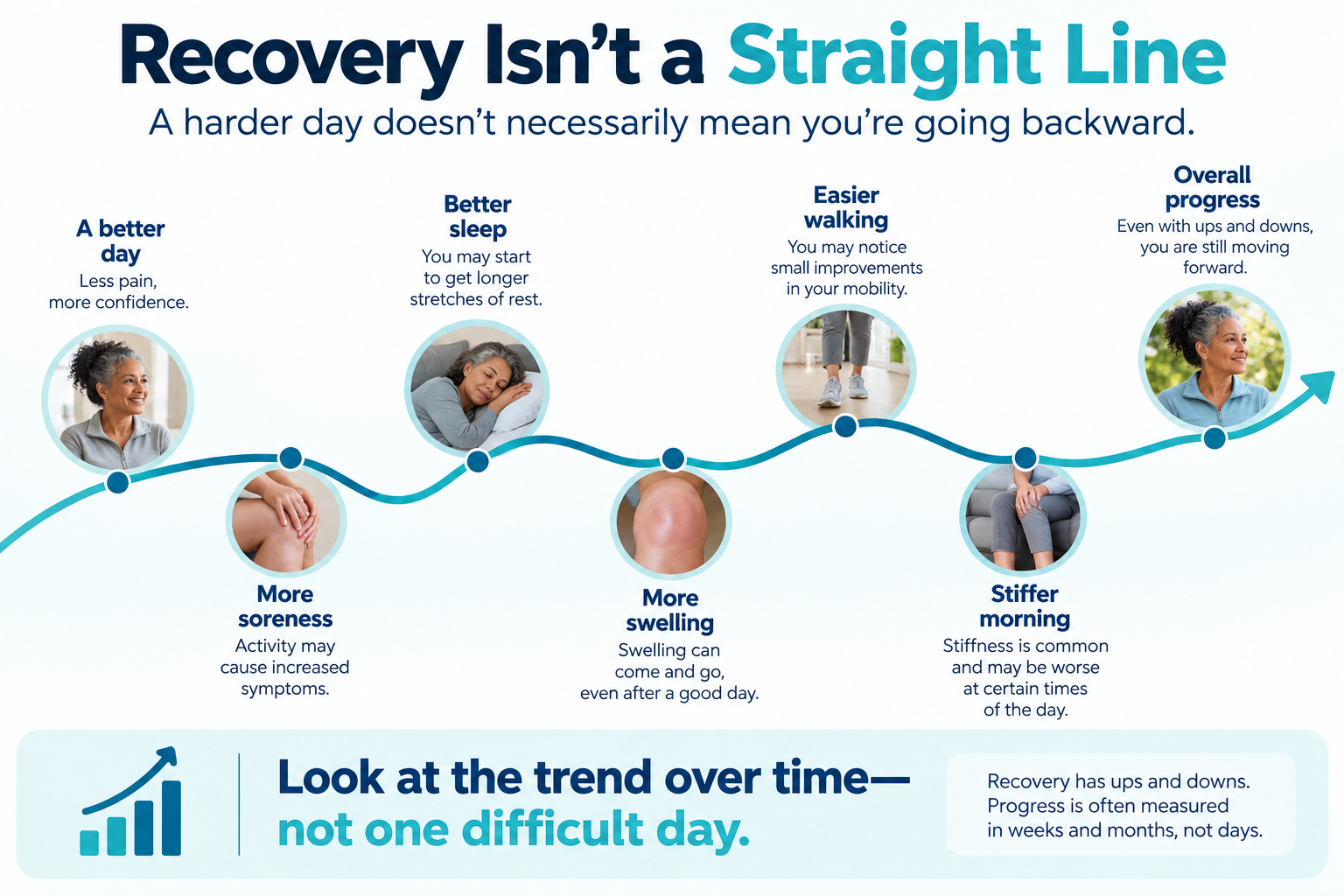
One of the most important expectations to have before knee replacement is that recovery isn't perfectly linear.
You may have a day when your knee feels noticeably better, followed by a day when it feels stiffer, more swollen, or more uncomfortable.
Activity, sleep, therapy, swelling, and simply where you are in recovery can all affect how a particular day feels.
Instead of judging your recovery by one difficult afternoon, try to pay attention to the larger trend over time.
Try Not to Compare Your Recovery With Someone Else's
Knee replacement stories are everywhere.
A friend may tell you they were walking without a walker remarkably quickly. Someone online may say their recovery was easy. Another person may describe the exact opposite.
Those experiences don't establish what your recovery should look like.
Age, health, strength, mobility before surgery, pain, swelling, surgical factors, and many other variables can influence recovery.
Someone else's timeline isn't your deadline.
Related: Will I Need a Walker After Knee Replacement Surgery? →
Remember Why You're Having the Surgery
Before surgery, think beyond the operation itself.
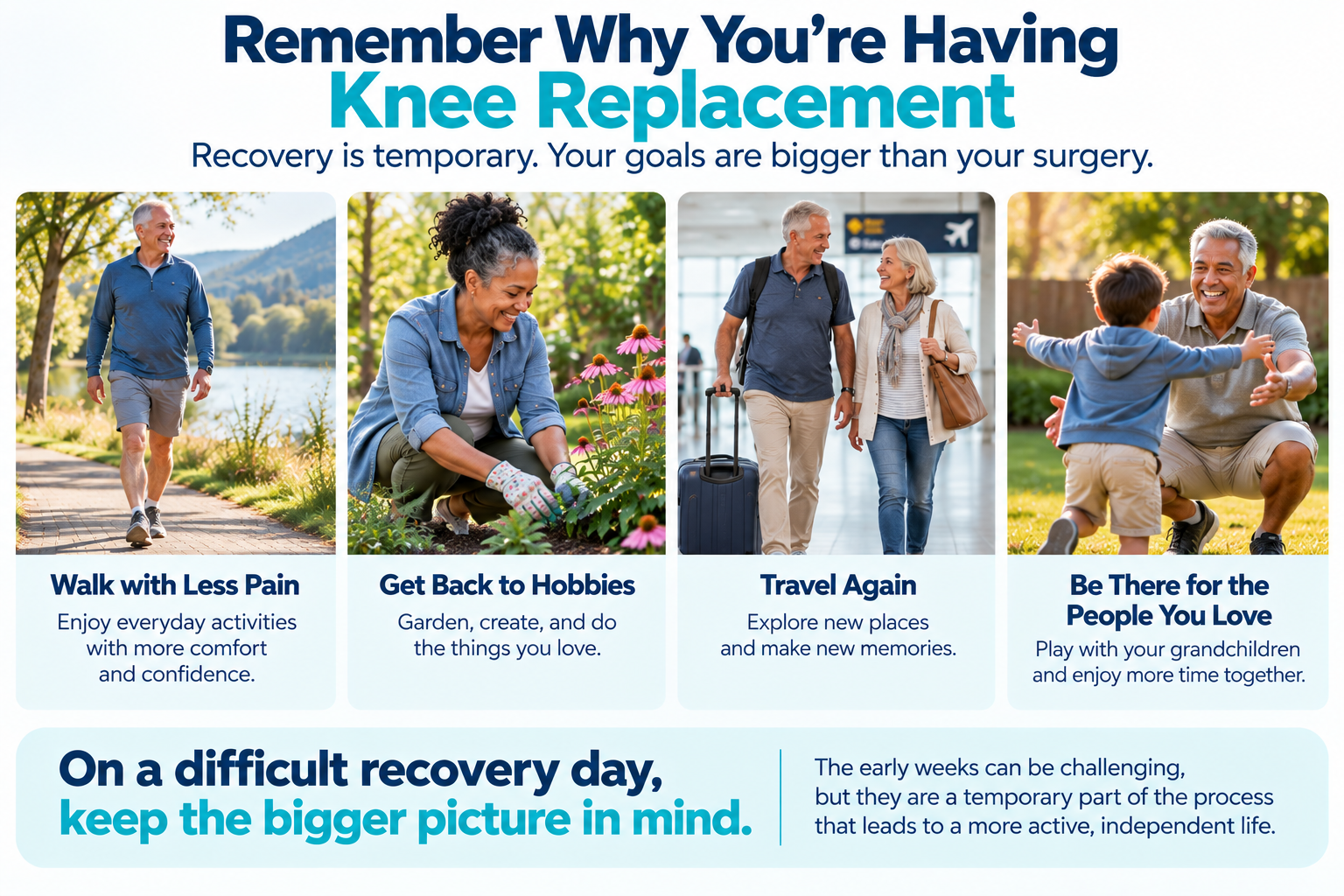
What do you want your knee to allow you to do again?
Maybe it's walking through the grocery store with less pain. Traveling. Gardening. Playing with your grandchildren. Getting back to a hobby. Or simply making everyday life easier.
Those goals may feel far away during a difficult early day.
That's okay.
Your reason for having knee replacement can help keep the longer recovery picture in perspective when your attention is temporarily focused on soreness, swelling, sleep, and getting through the day.
Prepare for Some Loss of Independence—Temporarily
For someone who's normally independent, needing help can be one of the more frustrating parts of early recovery.
You may need assistance with things you normally wouldn't think twice about.
Preparing yourself for that before surgery can make it easier to accept help when you actually need it.
And remember that needing support early doesn't mean you'll need the same amount of support throughout recovery.
As your mobility and confidence improve, your needs can change too.
Related: How Can Family Help After Knee Replacement Surgery? →
Reduce the Unknowns Before Surgery
You can't predict exactly how your knee replacement recovery will go.
But you can remove some unnecessary uncertainty.
Know how you're getting home. Have your recommended equipment ready. Prepare the areas of your home you'll use most. Know who you can call for help. Read the postoperative instructions you're given.
Every question you answer beforehand is one less thing to figure out when you're tired and sore after surgery.
Related: How Should You Prepare for the Ride Home After Knee Replacement? →
Know That Some Difficult Symptoms Are Expected
Pain, swelling, stiffness, bruising, fatigue, and disrupted sleep can all be part of knee replacement recovery.
That doesn't mean every symptom should automatically be ignored.
The goal before surgery isn't to memorize every possible complication. It's to understand that recovery can involve uncomfortable and sometimes surprising symptoms while also knowing when something deserves a call to your healthcare team.
Having that distinction in mind can reduce some of the uncertainty that comes with every new sensation after surgery.
Related: What’s Normal After Knee Replacement? Common Symptoms & Warning Signs →
Don't Put Pressure on Yourself to Have a “Perfect” Recovery
It's easy to turn recovery into a series of tests.
Should I be walking farther?
Should my knee bend more?
Should I still need this much help?
Why was yesterday better than today?
Your healthcare team will have important goals and milestones for you, but recovery isn't a competition.
There will likely be things that improve quickly and others that take longer.
Try to judge your progress over weeks and months, not individual hours or days.
You Don't Have to Feel Completely Ready
It's normal to have questions before a major surgery.
You can prepare your home, organize your support, learn about recovery, and still feel nervous when surgery day arrives.
Being prepared doesn't mean eliminating every uncertainty.
It means going into knee replacement with a more realistic understanding of what may come next—and knowing that recovery is a process rather than a single moment.
The operation is only the beginning.
Want to Feel More Prepared for What Comes After Surgery?
The What Your Surgeon Didn't Have Time to Explain About Your Knee Replacement guide goes deeper into the parts of recovery that can be difficult to cover during a short preoperative appointment.
It's designed to help you understand what recovery may actually feel like so fewer things catch you by surprise.
Explore What Your Surgeon Didn't Have Time to Explain About Your Knee Replacement →
Want More Support Throughout Your Recovery?
The Knee Replacement Recovery Bundle brings together Post Op Ready's knee replacement guides and resources to help you prepare for surgery and navigate the recovery ahead.
Explore the Knee Replacement Recovery Bundle →
Preparing for Knee Replacement Surgery?
Start with the FREE Knee Replacement Checklist to help organize some of the essentials before surgery.
