
How Should You Prepare for the Ride Home After Knee Replacement?
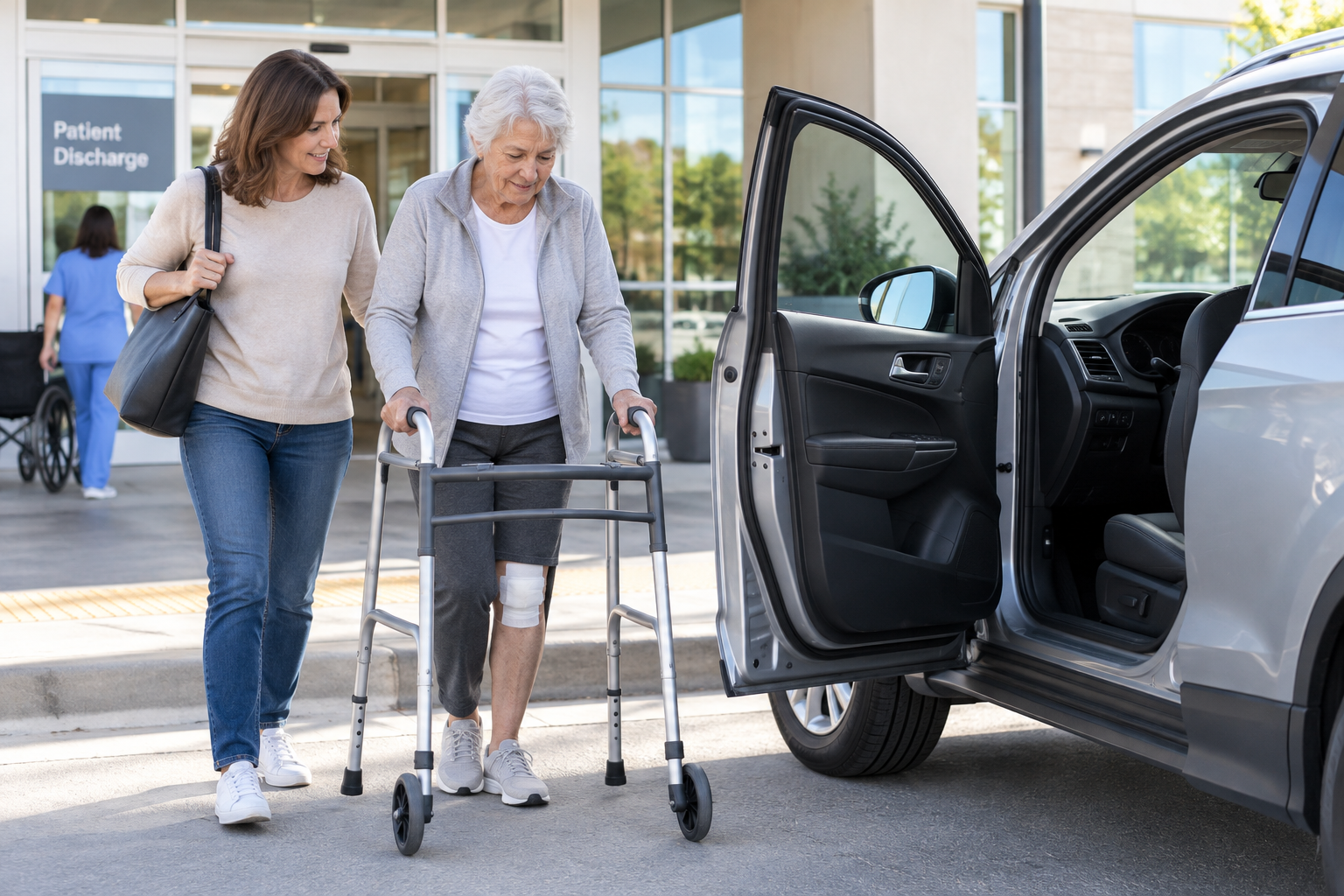
Your first trip after knee replacement isn't exactly a normal car ride.
You may be tired, sore, swollen, and still feeling the effects of medications or anesthesia. Your knee may not bend comfortably, and simply getting into a vehicle can feel very different than it did before surgery.
A little planning before surgery can make the trip home much less stressful.
You don't need an elaborate setup. But you do want the right vehicle, enough room to get comfortable, and someone who understands that you may need a little extra time and help.
Who Should Drive You Home After Knee Replacement?
You won't be driving yourself home after knee replacement, so arrange for a responsible adult to pick you up.
Ideally, this person should know approximately when you're expected to be discharged and be available without making you feel rushed.
Discharge timing can change, so make sure your driver has a way to stay in contact with you or the person accompanying you.
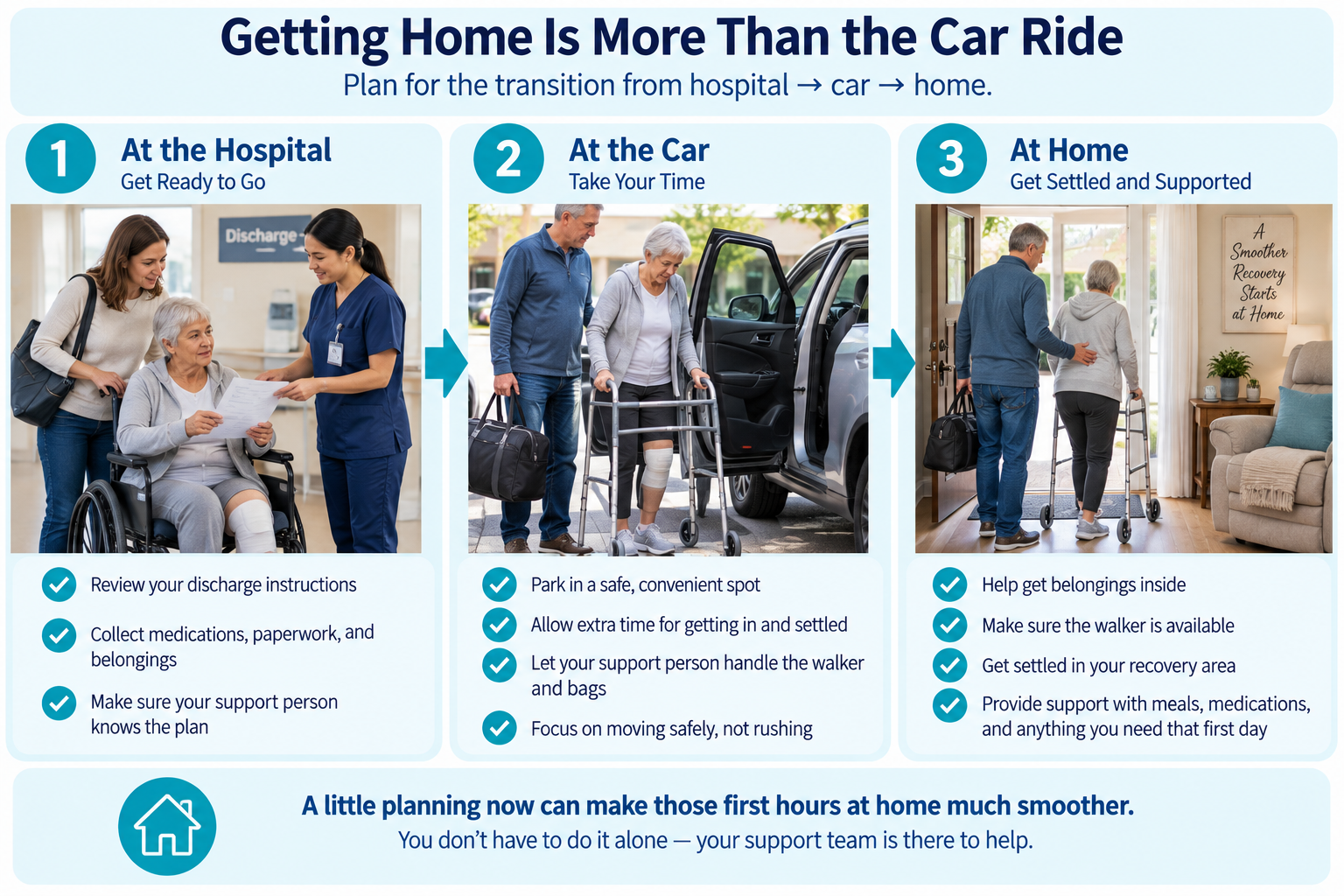
Your support person can also help keep track of anything you're bringing home from the surgical facility, including paperwork, medications, and your walker.
What Kind of Vehicle Is Best After Knee Replacement?
You generally want a vehicle that's easy to get into and out of without requiring an extreme step up or drop down.
Very low vehicles can make getting out more difficult when your knee is stiff and sore. Very tall vehicles may require more effort to climb into.
A standard-height passenger vehicle or SUV may work well for many people, but what's easiest depends on your height, mobility, and the vehicles available to you.
If you're unsure, talk with your physical therapist or surgical team before discharge. They can help you determine what makes sense for your situation.
Make Room Before You Arrive at the Hospital
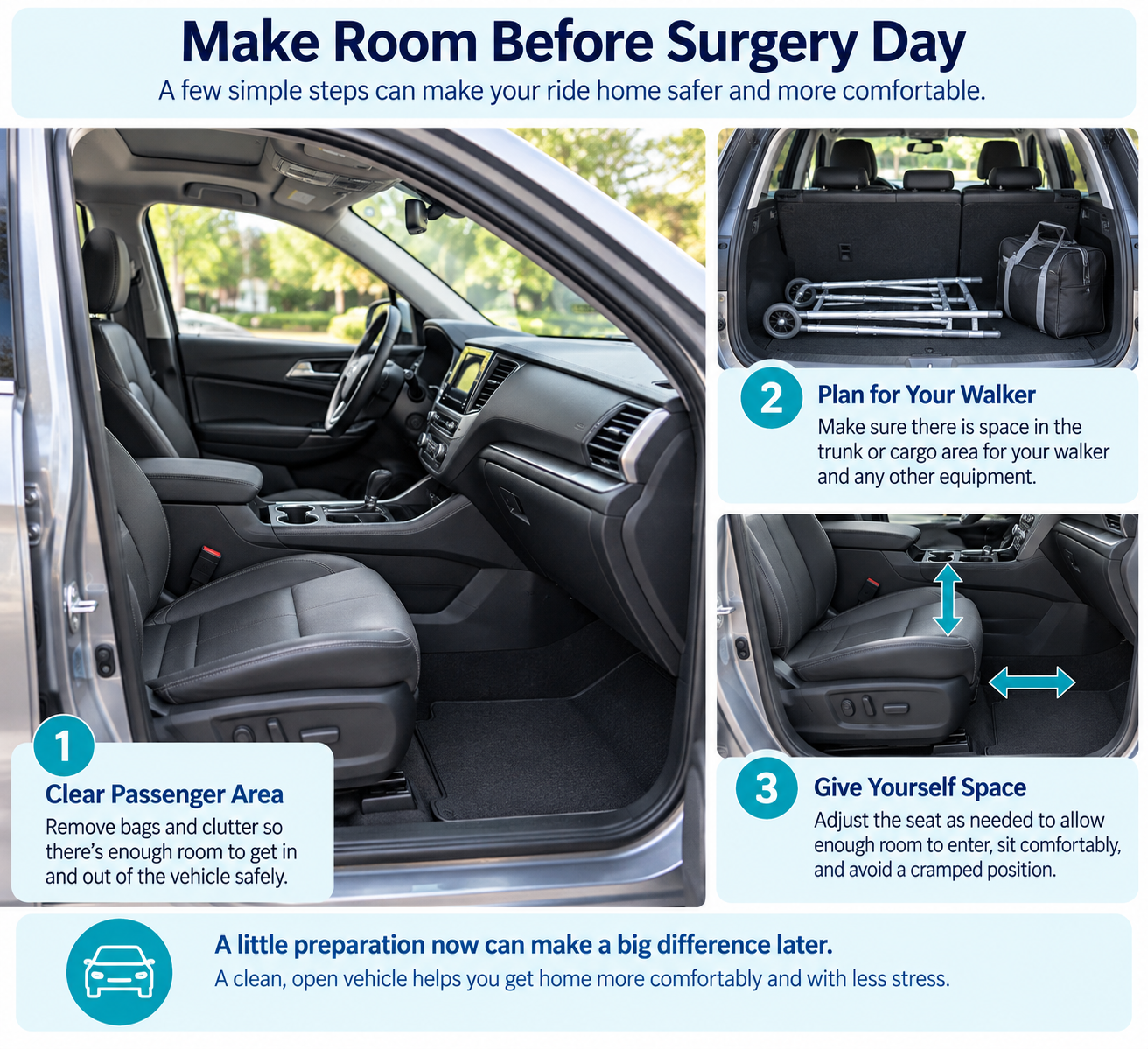
Don't wait until discharge to discover that the passenger area is full of bags, equipment, or other belongings.
Clear out the vehicle beforehand.
You want enough room to enter the vehicle without having to navigate around clutter and enough space to position yourself comfortably once you're seated.
Your walker also needs somewhere to go.
Having the vehicle ready before surgery eliminates one small—but very avoidable—source of stress on discharge day.
Where Should You Sit for the Ride Home?
For many patients, the front passenger seat is a practical option because it can provide more room and may be easier to access than a rear seat.
How the seat should be positioned depends on your vehicle and your individual needs.
The goal is simply to create enough space that you're not trying to squeeze your newly operated knee into a cramped position.
Your hospital or physical therapy team may also practice or review car transfers with you before discharge.
Follow their instructions, particularly if you've been given specific precautions.
Don't Overcomplicate the Car Setup
You may see elaborate post-surgery car setups online.
Most people don't need to transform their vehicle into a recovery station.
Comfortable clothing and a vehicle with adequate space may be more important than bringing a long list of accessories.
If your surgical team recommends anything specific for your ride home, follow those instructions.
Otherwise, think simple, uncluttered, and easy to access.
Think About the Trip Before Surgery Day
Distance matters.
A short drive home is different from spending an hour or more in the car immediately after surgery.
If you live farther from the surgical facility, ask your healthcare team ahead of time whether they have any recommendations for the trip.
It's also worth thinking about practical details such as traffic, where the driver will park, and how you'll get from the vehicle into your home.
You don't need to plan every minute.
You just don't want to be solving these problems for the first time when you're tired and ready to get home.
Your Support Person's Job Doesn't End at the Driveway
The person bringing you home may be one of your most important helpers during those first hours.
You may need assistance getting your belongings inside, making sure your walker is available, getting settled, or simply keeping track of everything that came home with you.
This is also a good time for your support person to know where frequently used items are located.
You don't necessarily need a house full of helpers.
One reliable person who knows the plan can be incredibly valuable.
Related: How Can Family Help After Knee Replacement Surgery? →
Have Your Main Recovery Area Ready Before You Leave
When you arrive home, you probably won't feel like rearranging furniture or searching for things you need.
Before surgery, prepare the area where you'll spend much of your early recovery.
Make sure there's a clear path from the entrance to your primary sitting area and bathroom, and that the basic items you'll need are easy to access.
Related: What Are the Best Chairs and Home Aids After Knee Replacement? →
Make Sure Your Walker Is Ready Too
Your walker will likely be one of the first pieces of equipment you use when you arrive home.
It should already be appropriately adjusted and in good working condition rather than something you're trying to figure out at the front door.
If you're unsure about the fit, ask your physical therapist or healthcare team to check it before discharge.
Related: How Should a Walker Fit After Knee Replacement? →
Your First Night Is Easier When Everyone Knows the Plan
Before surgery, talk with whoever will be helping you about what that first evening may involve.
You may be more tired than expected. You may need help with meals, medications, household tasks, or simply getting things you can't easily carry while using a walker.
You don't need to predict exactly how you'll feel.
The point is to make sure your support person understands that getting you home is only the beginning of the day, not the end of their role.
Related: What to Expect the First 72 Hours After Knee Replacement →
You Don't Need a Perfect Plan
There's no way to predict exactly what discharge day will feel like.
You may feel better than expected. You may feel exhausted. You may be eager to get home or surprised by how much effort a simple car ride takes.
That's okay.
Preparing the vehicle, choosing a reliable support person, clearing your path into the house, and having your main recovery space ready can remove several unnecessary problems from an already busy day.
The goal isn't to make the ride home perfect. It's to make it one less thing you have to worry about.
Related: How Do You Mentally Prepare for Knee Replacement Surgery? →
Want to Feel More Prepared Before Knee Replacement?
The What Your Surgeon Didn't Have Time to Explain About Your Knee Replacement Guide helps you understand many of the questions and surprises that can come up around knee replacement recovery.
Explore the What Your Surgeon Didn't Have Time to Explain Guide →
Want More Support Throughout Knee Replacement Recovery?
The Knee Replacement Recovery Bundle brings together Post Op Ready's knee replacement guides and resources to help you prepare for surgery and navigate the recovery ahead.
Explore the Knee Replacement Recovery Bundle →
Preparing for Knee Replacement?
Start with the FREE Knee Replacement Checklist to help organize some of the essentials before surgery.
