
How Can Family Help After Knee Replacement Surgery?

Having help after knee replacement can make the transition home much easier.
But there's an important distinction between having someone around and having someone who understands how to be genuinely helpful.
Your family member or support person doesn't need to become your nurse or physical therapist. In many cases, the most valuable support is much simpler: being available, taking care of some of the everyday responsibilities, and understanding that your energy and mobility may look very different for a while.
Why Support Can Be So Helpful After Knee Replacement
Knee replacement affects more than your knee.
During early recovery, ordinary parts of the day can require considerably more effort. Walking around the house takes more planning. Your normal routine is disrupted. Sleep may be difficult, and fatigue can be surprisingly significant.
That doesn't necessarily mean you need someone doing everything for you.
It means having another person available can take some of the pressure off while you're adjusting to recovery.
Related: What to Expect the First 72 Hours After Knee Replacement →
Help With the Things That Don't Need to Be Your Job
One of the best ways family members can help is by handling some of the everyday responsibilities that don't need to compete for your energy.
Meals, household tasks, errands, pets, and other routine responsibilities don't disappear just because you've had surgery.
Taking a few of those things off your plate can allow you to focus more attention on your recovery.
This is especially helpful when planned before surgery rather than figuring everything out once you're already home.
Your Support Person Should Know the Plan Before Surgery
Don't assume everyone automatically knows what you'll need.
Before surgery, talk about who is bringing you home, who will be available afterward, and how you'll handle some of the basic responsibilities around the house.
This doesn't need to become a complicated schedule.
Even a simple conversation beforehand can prevent the situation where everyone assumes somebody else is taking care of something.
Related: How Should You Prepare for the Ride Home After Knee Replacement? →
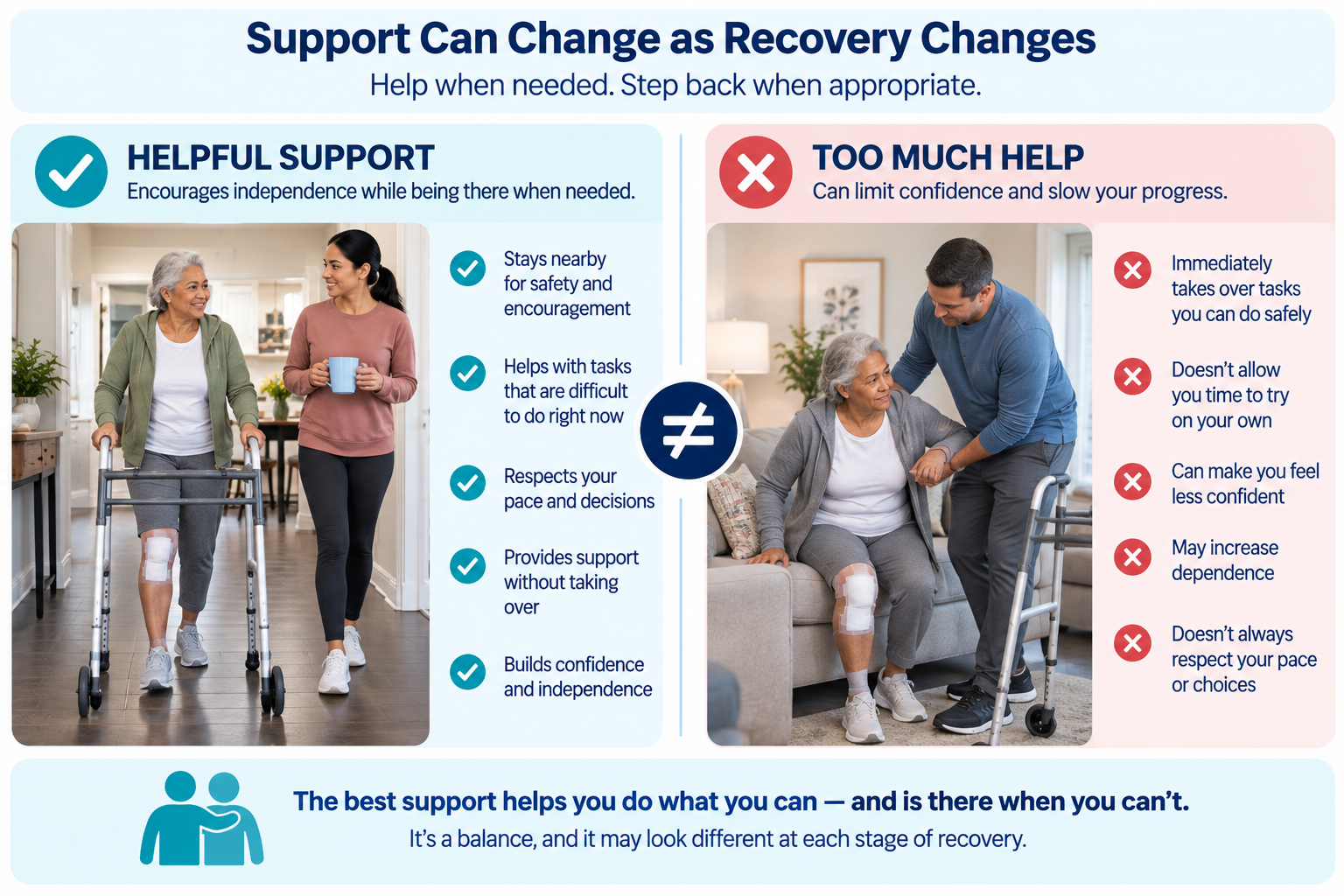
Support Doesn't Mean Doing Everything for You
There's another side to helping that families don't always expect.
Sometimes being supportive means not immediately doing everything for the person recovering.
As your mobility improves, gradually returning to the things you're able to do safely is part of getting back to your normal life.
Your family can be nearby when you need assistance without assuming that every task needs to be done for you.
Finding that balance may change throughout recovery.
Recovery Can Be Frustrating Sometimes
Knee replacement recovery doesn't always move forward in a perfectly predictable way.
A day that feels encouraging can be followed by one that feels more difficult. Sleep disruption, soreness, swelling, fatigue, and the temporary loss of your normal routine can all become frustrating.
Family members don't necessarily need to fix those feelings.
Sometimes simply understanding that recovery can fluctuate—and avoiding comparisons with someone else's knee replacement—is more helpful than constantly trying to measure progress.
Related: What’s Normal After Knee Replacement? Common Symptoms & Warning Signs →
Know When to Let the Healthcare Team Take Over
Your family can be an extra set of eyes and ears, but they aren't expected to decide whether every symptom is normal.
If something about your recovery concerns you or your support person, follow the instructions provided by your surgical team and contact them when appropriate.
And if you've been given specific postoperative precautions or instructions, those should take priority over general advice from friends, relatives, or other people who have had knee replacements.
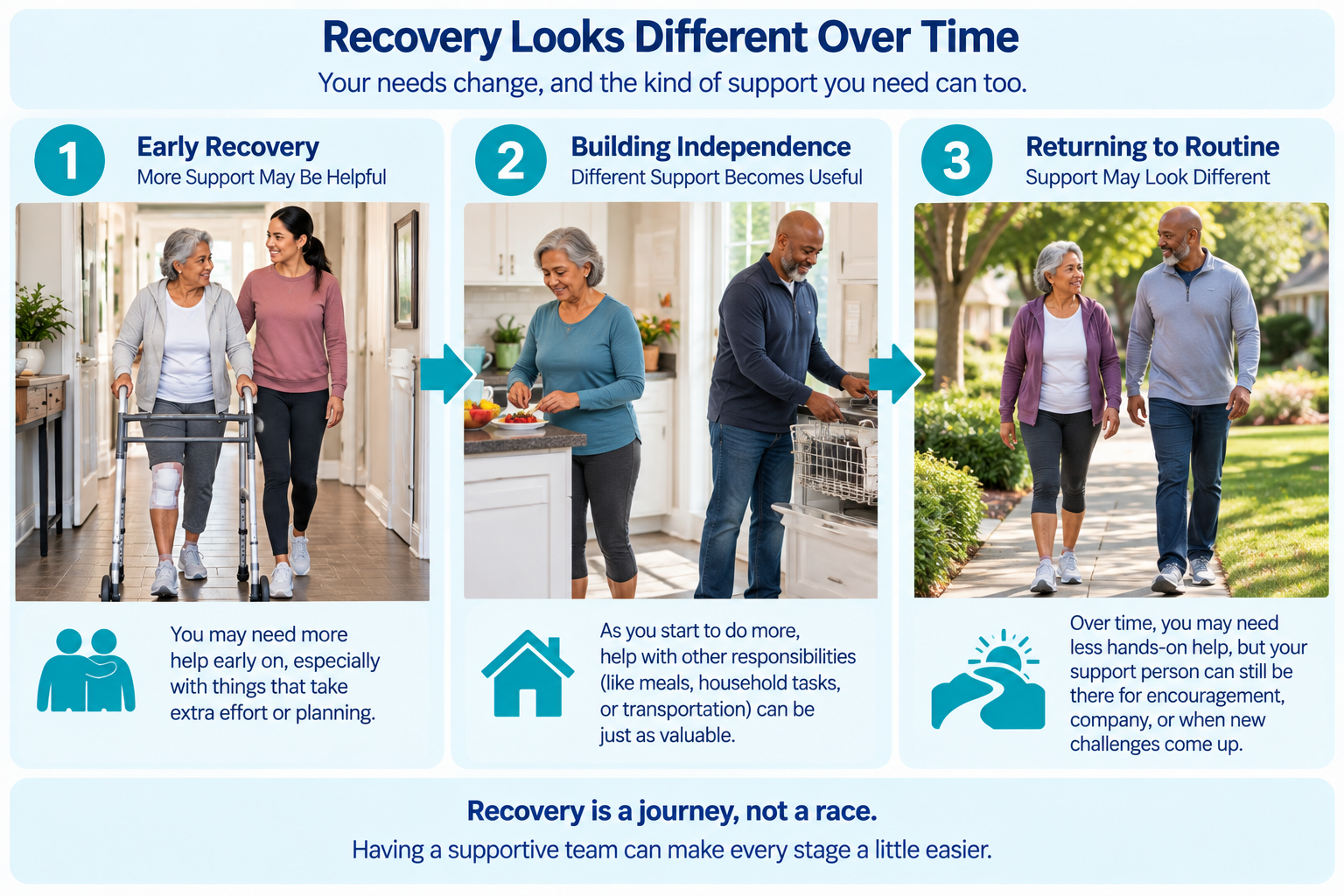
You May Need Different Kinds of Help as Recovery Changes
The support that's useful immediately after surgery may not be the same support you need later.
Early on, simply having someone available may be reassuring.
As you become more independent, you may need less hands-on help but still appreciate assistance with certain responsibilities, transportation, or other parts of everyday life.
There's no reason to decide beforehand exactly how long you'll need help.
Recovery changes, and your support can change with it.
A Little Preparation Helps Everyone
Family support works best when everyone has a general idea of what to expect.
Talk before surgery. Decide who will be available. Take care of the obvious responsibilities ahead of time. And understand that you may need to adjust the plan once you see how recovery actually feels.
Your support person doesn't need to know everything about knee replacement.
They just need to know how to support you—and when to ask for additional help.
Want Your Caregiver to Feel More Prepared?
The Caregiver Guide for Knee Replacement Recovery was created specifically for the person helping you through recovery.
It goes beyond the general information in this article with more detailed guidance to help caregivers understand what to expect and how they can provide practical support after surgery.
Explore the Caregiver Guide for Knee Replacement Recovery →
Want More Support Throughout Knee Replacement Recovery?
The Knee Replacement Recovery Bundle brings together Post Op Ready's knee replacement guides and resources to help you prepare for surgery and navigate recovery with fewer surprises.
Explore the Knee Replacement Recovery Bundle →
Preparing for Knee Replacement?
Start with the FREE Knee Replacement Checklist to help you organize some of the essentials before surgery.
