
Will I Need a Walker After Knee Replacement Surgery?

If you’re preparing for knee replacement, there’s a good chance a walker will be part of your early recovery.
For many patients, it’s one of the first pieces of equipment they use when they begin walking after surgery. And while you may be eager to get rid of it quickly, the walker has an important job: helping you move safely while your strength, balance, confidence, and walking pattern begin to recover.
The important thing to know is that needing a walker after knee replacement is normal—and there isn’t one exact timeline that applies to everyone.
Why Is a Walker Common After Knee Replacement?
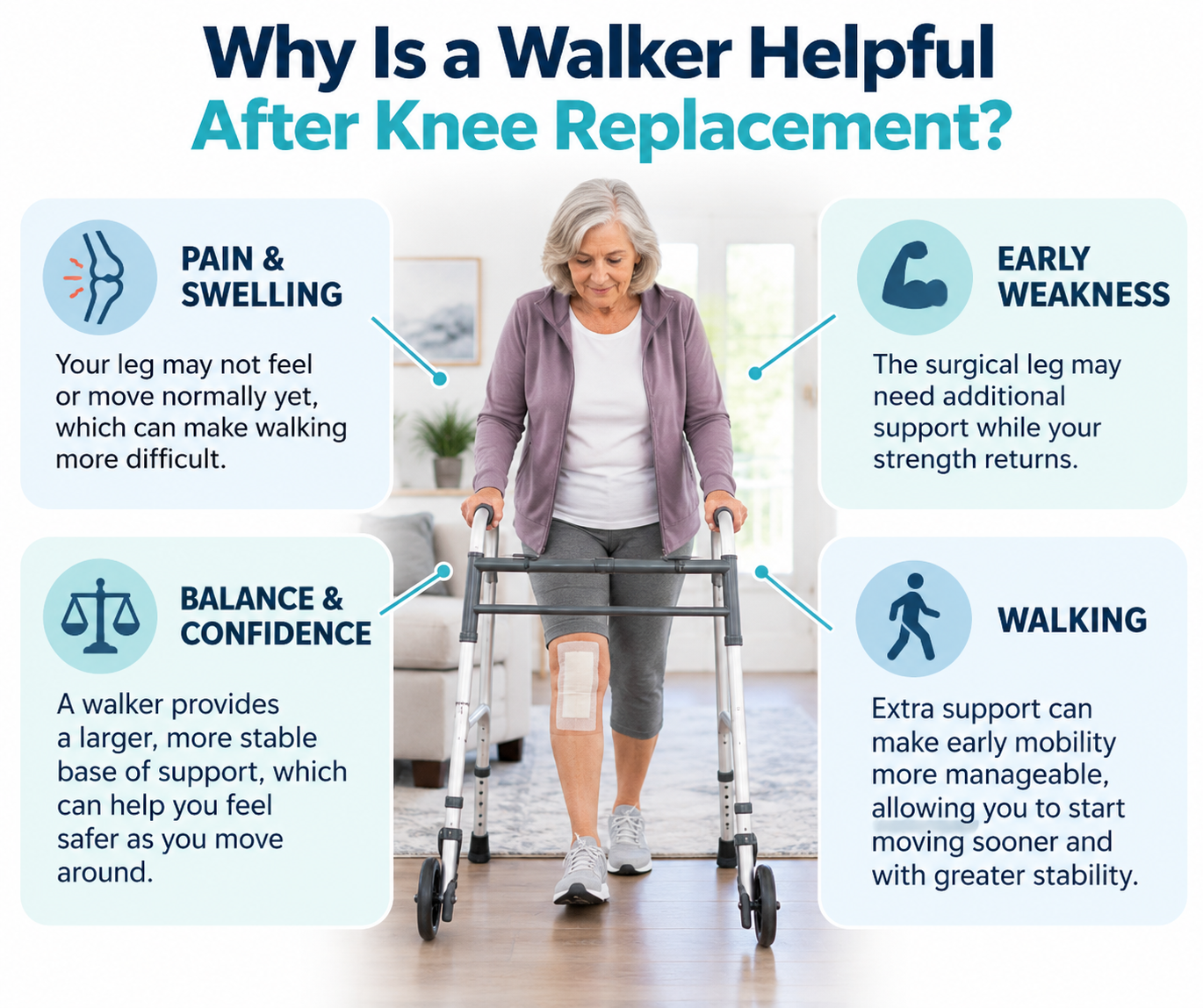
Your leg can feel very different immediately after surgery.
Pain, swelling, weakness, stiffness, medications, and simply adjusting to a new knee can all affect how steady you feel when you're standing and walking.
A walker gives you additional support during this early period while allowing you to begin moving around.
For many patients, that extra stability can make those first trips around the hospital and home feel much more manageable.
Your Walker May Be Used Earlier Than You Expect
Walking often begins surprisingly soon after knee replacement.
Depending on your surgeon, procedure, medical status, and hospital protocol, you may be up with the rehabilitation or nursing team relatively early in your hospital stay.
That's also why it's helpful to know before surgery what mobility equipment your surgical team expects you to have available.
Don't wait until you're home to discover that you need a walker.
Related: What to Expect the First 72 Hours After Knee Replacement →
What Kind of Walker Is Commonly Used?
Many knee replacement patients use a front-wheeled walker, which has two wheels in the front and stationary legs in the back.
Your surgical team may recommend something different depending on your individual needs, so follow the equipment recommendations you're given.
Whatever device you use, proper fit matters. A walker that is too high or too low can make walking unnecessarily awkward and uncomfortable.
Related: How Should a Walker Fit After Knee Replacement? →
How Long Will I Need a Walker After Knee Replacement?
This is usually the question people really want answered.
Unfortunately, there isn't a universal number of days.
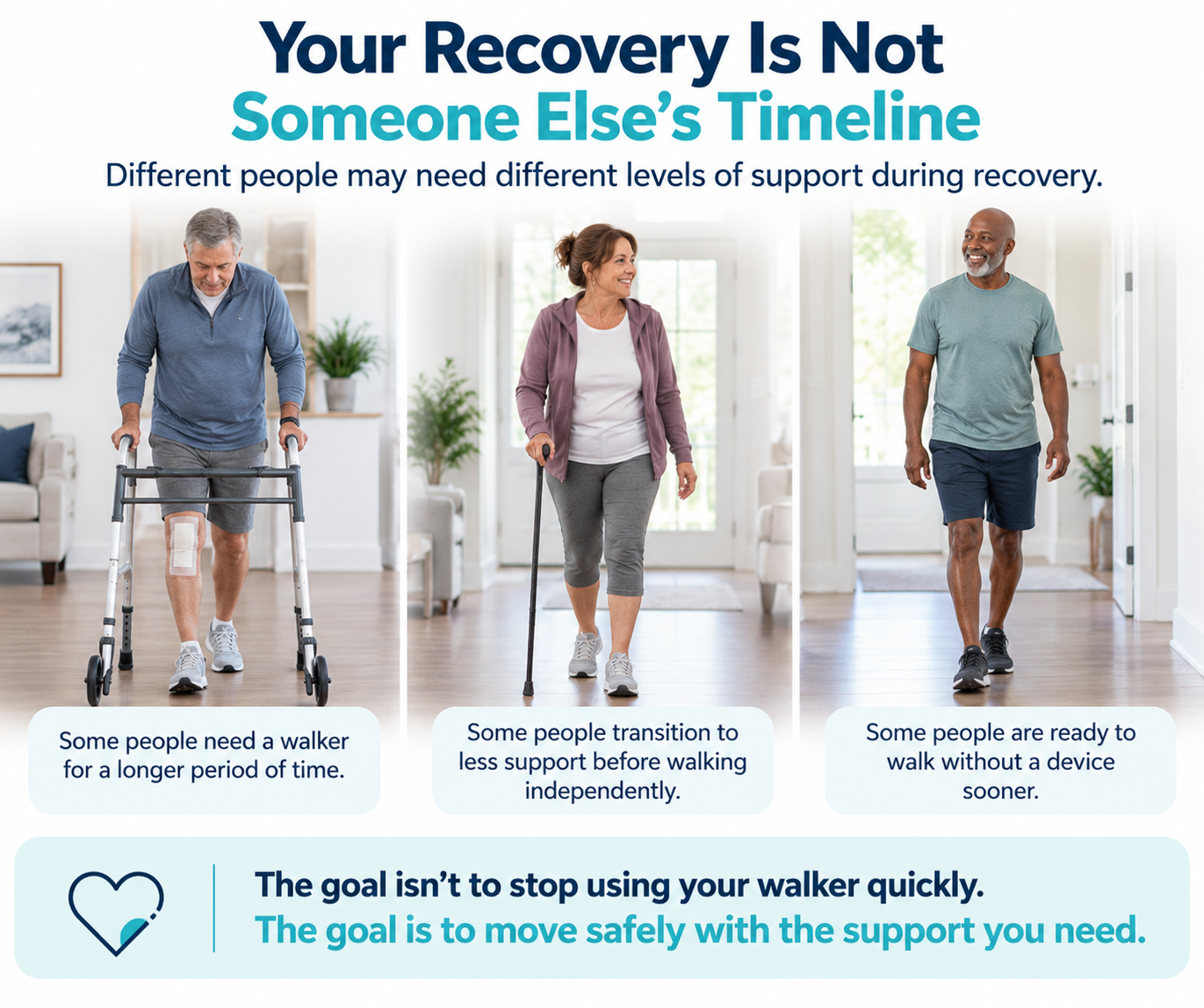
Some patients progress away from their walker relatively quickly, while others benefit from using it longer. Your preoperative mobility, balance, strength, pain, surgical recovery, home environment, and other health considerations can all affect the timeline.
Instead of thinking:
“When am I supposed to be done with my walker?”
A better question is:
“Am I ready to walk safely without this level of support?”
Your surgeon or physical therapist can help you determine when it's appropriate to change your assistive device.
Don't Rush to Get Rid of the Walker
It can be tempting to view the walker as evidence that you're “behind.”
It isn't.
Getting rid of your walker earlier doesn't automatically mean you're recovering faster.
If removing the walker causes you to become significantly less steady or dramatically changes the way you're walking, you may simply need more support right now.
The goal isn't to stop using equipment as quickly as possible.
The goal is to use the appropriate amount of support while you recover.
Your Home Setup Matters Too
Using a walker changes how you move through your house.
Walkways that felt perfectly adequate before surgery can suddenly feel narrow when you're navigating them with a mobility device.
Before surgery, look at the areas you'll use most often and consider whether you'll have enough room to move through them safely with your walker.
This is one reason preparing your home before knee replacement can be so useful.
Related: What Are the Best Chairs and Home Aids After Knee Replacement? →
Moving Away From the Walker Is Individual
Eventually, the walker becomes more support than you need.
Exactly what happens next varies. Some patients may transition to another assistive device before walking independently, while others may follow a different progression based on their needs and their healthcare team's recommendations.
This isn't something you need to race toward.
Recovery after knee replacement happens over time, and mobility is only one piece of that process.
Ask About Your Walker Before Surgery
Before your knee replacement, make sure you know:
Whether your surgical team expects you to use a walker
Whether one will be provided or you need to obtain one beforehand
What type they recommend
Who will make sure it is adjusted appropriately
You don't need to figure out your entire recovery before surgery.
But having the equipment you're expected to use ready ahead of time can make one part of coming home much simpler.
Related: How Should You Prepare for the Ride Home After Knee Replacement? →
A Walker Is a Tool, Not a Recovery Milestone
Your walker is there to help you move safely while your body recovers.
How long you use it doesn't tell you whether your knee replacement is going well, and someone else's timeline doesn't determine yours.
Use the support you need, follow the recommendations of your surgical and rehabilitation team, and allow your mobility to progress based on your recovery—not someone else's calendar.
Want More Help Preparing for Knee Replacement?
The What Your Surgeon Didn't Have Time to Explain About Your Knee Replacement guide helps you understand some of the realities of recovery that are difficult to cover during a short preoperative appointment.
Explore What Your Surgeon Didn't Have Time to Explain About Your Knee Replacement →
Want Everything in One Place?
The Knee Replacement Recovery Bundle brings together Post Op Ready's knee replacement resources to help you prepare for surgery and better understand what to expect throughout recovery.
Explore the Knee Replacement Recovery Bundle →
Preparing for Knee Replacement Surgery?
Start with the FREE Knee Replacement Checklist to help organize some of the essentials before surgery.
