
How Should a Walker Fit After Knee Replacement?
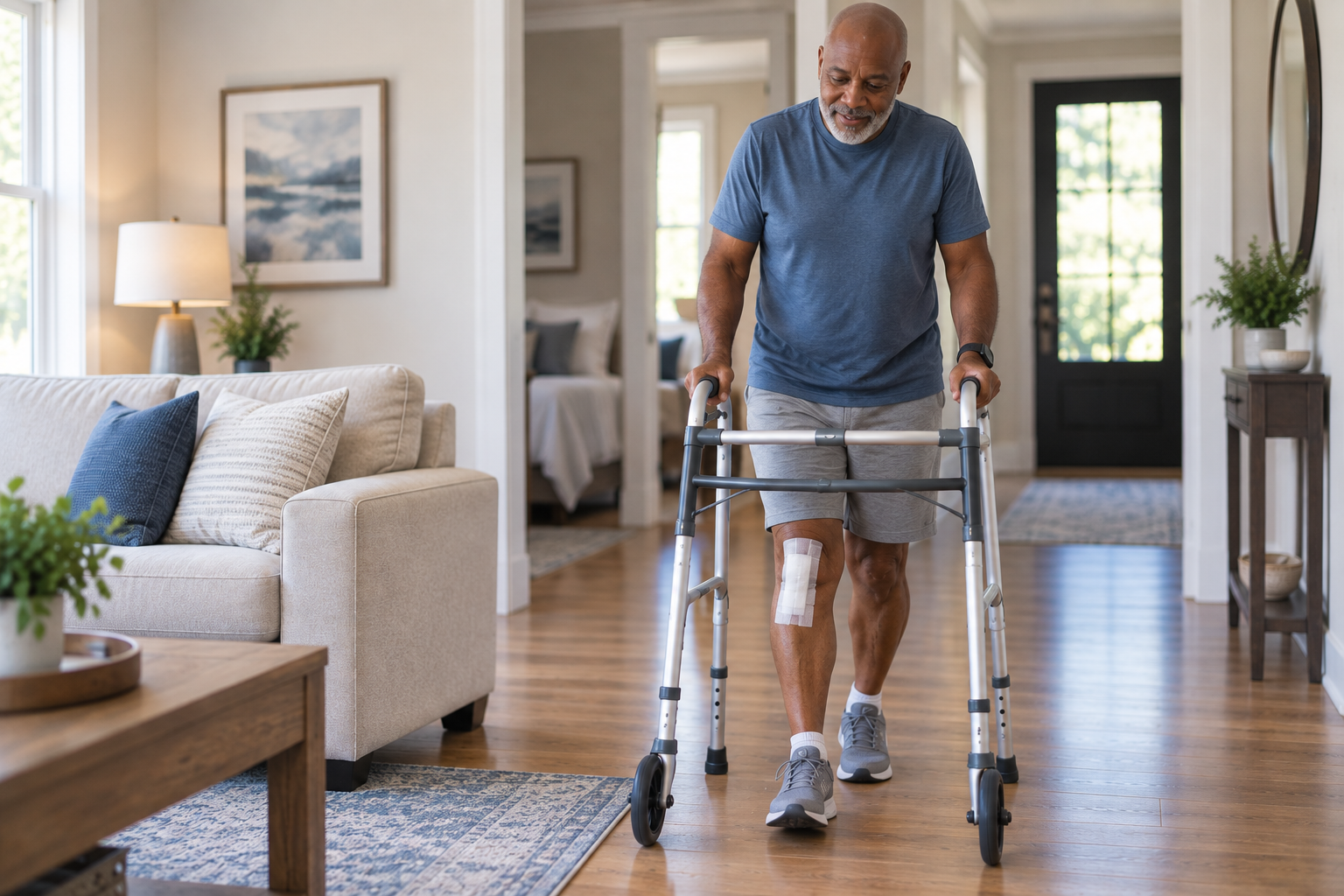
A walker is one of the most common pieces of equipment used during the early days after knee replacement.
Most patients expect to use one. What they may not realize is that how the walker is adjusted can make a noticeable difference in how comfortable and natural walking feels.
A walker that's too high or too low can change your posture, make you rely differently on your arms, and make walking feel more awkward than it needs to.
The good news?
Getting the basic fit right is relatively simple—and your physical therapist or healthcare team can help make sure it's appropriate for you.
Related: Will I Need a Walker After Knee Replacement Surgery? →
Why Walker Height Matters After Knee Replacement
Your walker should provide support without forcing your body into an awkward position.
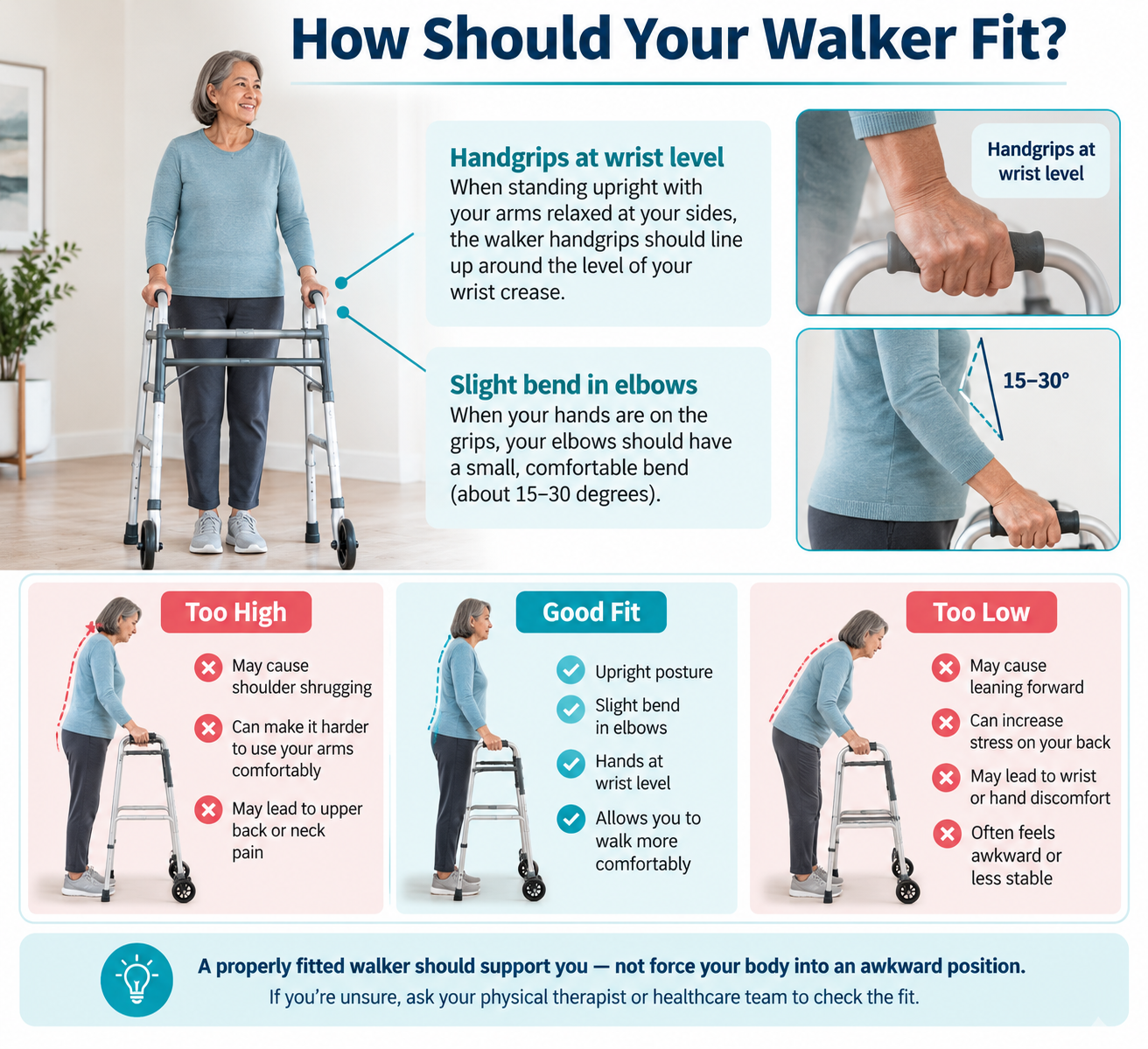
If it's too high, you may find yourself shrugging your shoulders or having difficulty comfortably using your arms for support.
If it's too low, you may lean forward or walk in a more flexed position.
Either way, you may end up compensating through your shoulders, wrists, back, or posture while you're already learning to move with a newly replaced knee.
The goal isn't to stand perfectly rigid or find one exact measurement that works for everyone.
It's to have the walker positioned so you can stand comfortably and use your arms without excessive reaching, bending, or shrugging.
Where Should the Walker Handgrips Be?
A common starting point is to stand upright with your arms relaxed naturally at your sides.
The walker handgrips should generally line up around the level of your wrist crease.
Once your hands are resting on the grips, your elbows should have a slight, comfortable bend rather than being completely straight.
That's a useful general guideline, but it doesn't replace having someone actually watch you use the walker.
Your height, posture, arm length, balance, and mobility can all influence what feels and functions best.
If you're receiving physical therapy after surgery, your PT can quickly check whether the walker is appropriately adjusted.
What Does a Poorly Fitted Walker Feel Like?
Sometimes the first clue isn't the walker itself.
It's how your body feels while using it.
You may notice that you're:
hunching forward while walking
shrugging your shoulders
locking your elbows
reaching downward for the handles
putting excessive pressure through your hands or wrists
becoming unusually tired through your arms or shoulders
Some upper-body fatigue can occur simply because you're using your arms differently than usual.
But if something feels especially awkward or uncomfortable, don't automatically assume that's just how walking with a walker is supposed to feel.
The fit may need another look.
Your Walker Should Help You Stand More Naturally
After knee replacement, it's common to move differently for a while.
Pain, swelling, stiffness, weakness, and years of compensating for an arthritic knee can all influence the way you stand and walk.
Your walker should provide support while you're working through those changes—not encourage an even more awkward posture.
If you find yourself constantly bent forward over the walker or reaching far in front of your body to use it, ask your physical therapist to take a look.
Sometimes the issue is the height.
Other times, the walker may be adjusted correctly and the way you're using it needs some attention.
Don't Forget About the Walker Itself
Height isn't the only thing worth checking before surgery.
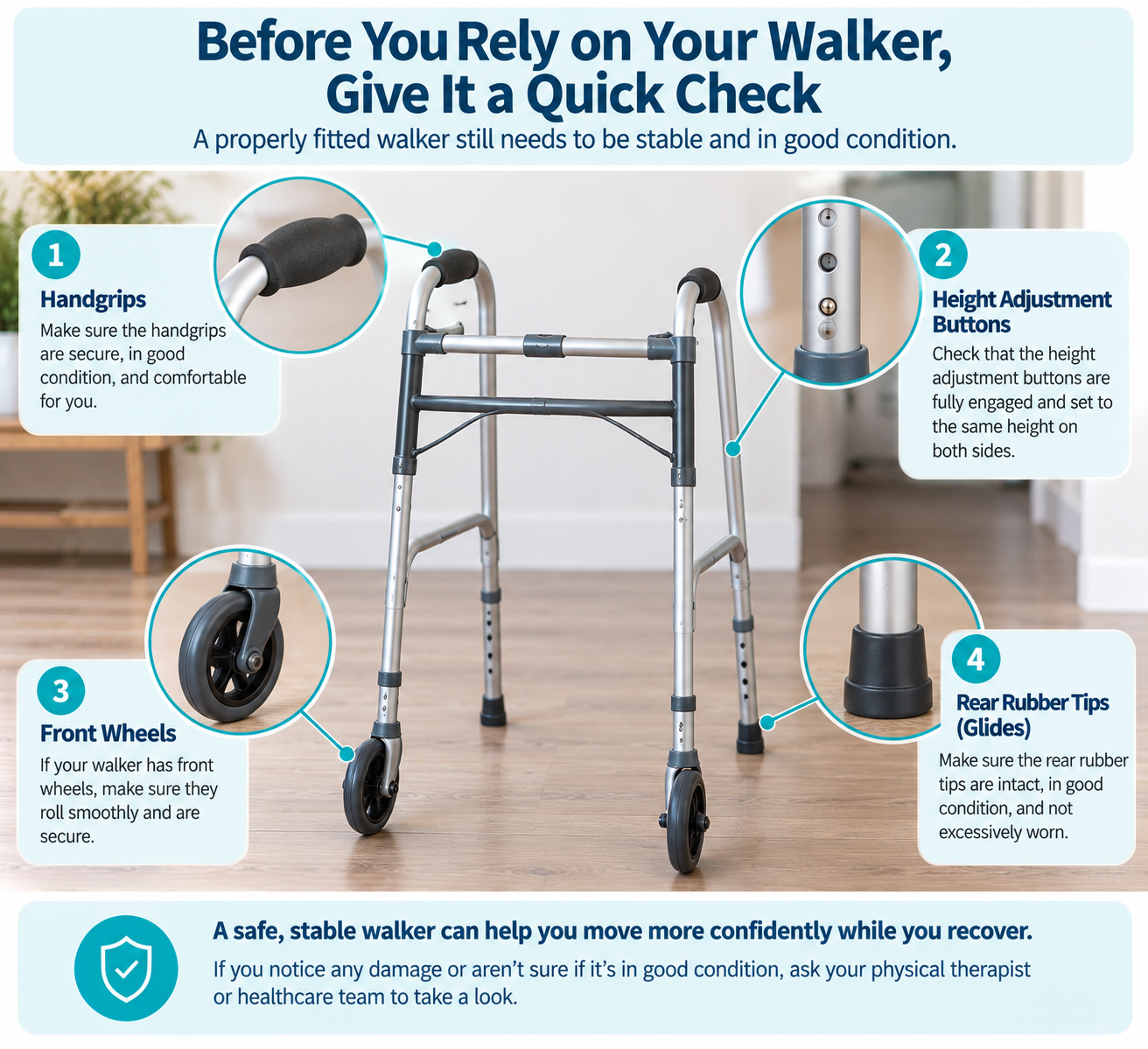
Take a quick look at the walker itself.
Make sure the handgrips feel secure, the height-adjustment mechanisms are properly locked, and the frame feels stable.
If you're using a front-wheeled walker, make sure the wheels move appropriately and that the rubber tips on the rear legs are in good condition.
If something feels loose, damaged, or unstable, address it before you're relying on the walker throughout the day.
Your Home Setup Matters Too
A properly fitted walker can still be frustrating if your home isn't easy to navigate with it.
Before surgery, look at the routes you'll use most often—especially between your main chair, bathroom, bedroom, and kitchen.
Is there enough room for the walker?
Are there loose rugs or clutter in the way?
Are commonly used items somewhere you can reach without constantly navigating around furniture?
You don't need to completely rearrange your house. But creating clear paths can make those first days at home much easier.
Related: What Are the Best Chairs and Home Aids After Knee Replacement? →
Be Careful With Advice From Other Knee Replacement Patients
It's tempting to watch someone else use a walker and assume you should be doing exactly what they're doing.
But knee replacement recovery isn't identical from person to person.
Your surgeon may have specific instructions based on your surgery, and your physical therapist may modify how you're using the walker based on your strength, balance, walking pattern, or other medical considerations.
That's why general walker-fitting advice is useful—but your own surgical and rehabilitation team's instructions should take priority.
When Should You Have Your Walker Checked?
If possible, have the walker checked before you leave the hospital or surgical facility.
But don't assume that means you can never ask about it again.
If you notice new wrist, shoulder, or back discomfort while using the walker—or something about your posture simply doesn't look or feel right—bring it up with your physical therapist.
It takes very little time to check the height and watch you walk with it.
Sometimes a small adjustment makes a surprisingly noticeable difference.
When Can You Stop Using a Walker After Knee Replacement?
This is one of the questions patients understandably want answered as soon as possible.
But there isn't one universal timeline.
Some people progress away from their walker relatively quickly, while others benefit from using it longer.
Balance, strength, pain, medications, confidence, walking quality, other medical conditions, and your surgeon's recommendations can all affect that decision.
The goal shouldn't be to get rid of the walker as quickly as possible.
The goal is to progress when you're able to walk safely and appropriately with less support.
Your physical therapist or surgical team can help you decide when you're ready to transition away from it.
Related: What to Expect the First 72 Hours After Knee Replacement →
A Walker Is a Tool, Not a Setback
Needing a walker after knee replacement doesn't mean you're behind.
For many patients, it's simply part of the early recovery process.
A properly fitted walker can give you additional support while you're dealing with swelling, stiffness, weakness, and the temporary changes in mobility that come with surgery.
Make sure it fits you. Make sure the equipment is in good condition. Make sure your home gives you enough room to use it.
And if something about it doesn't feel right, ask someone to check it.
Your walker should help you move—not make moving harder.
Related: What’s Normal After Knee Replacement? Common Symptoms & Warning Signs →
Want More Help Understanding What to Expect After Knee Replacement?
The What Your Surgeon Didn't Have Time to Explain About Your Knee Replacement Guide helps prepare you for the questions and unexpected parts of recovery that often don't get much time during preoperative appointments.
Explore the What Your Surgeon Didn't Have Time to Explain Guide →
Want More Support Throughout Your Recovery?
The Knee Replacement Recovery Bundle brings together Post Op Ready's knee replacement guides and resources to help you prepare for surgery and navigate recovery with fewer surprises.
Explore the Knee Replacement Recovery Bundle →
Preparing for Knee Replacement?
Start with the FREE Knee Replacement Checklist to help you prepare for surgery and get the essentials organized before you come home.
