
What Are the Best Chairs and Home Aids After Knee Replacement?

Recovering at home after knee replacement can make everyday tasks feel surprisingly different.
A chair that was comfortable before surgery may suddenly feel much too low. Getting on and off the toilet can take more effort. Carrying a drink while using a walker becomes complicated. Even reaching something on the floor may feel like a major undertaking.
The good news is that you don't necessarily need to fill your house with medical equipment.
A few thoughtfully chosen items can make the early days after knee replacement safer, easier, and more comfortable.
The key is figuring out which ones actually make sense for your home and your recovery.
What Kind of Chair Is Best After Knee Replacement?
One of the most important things to consider is where you'll spend time sitting during the first part of recovery.
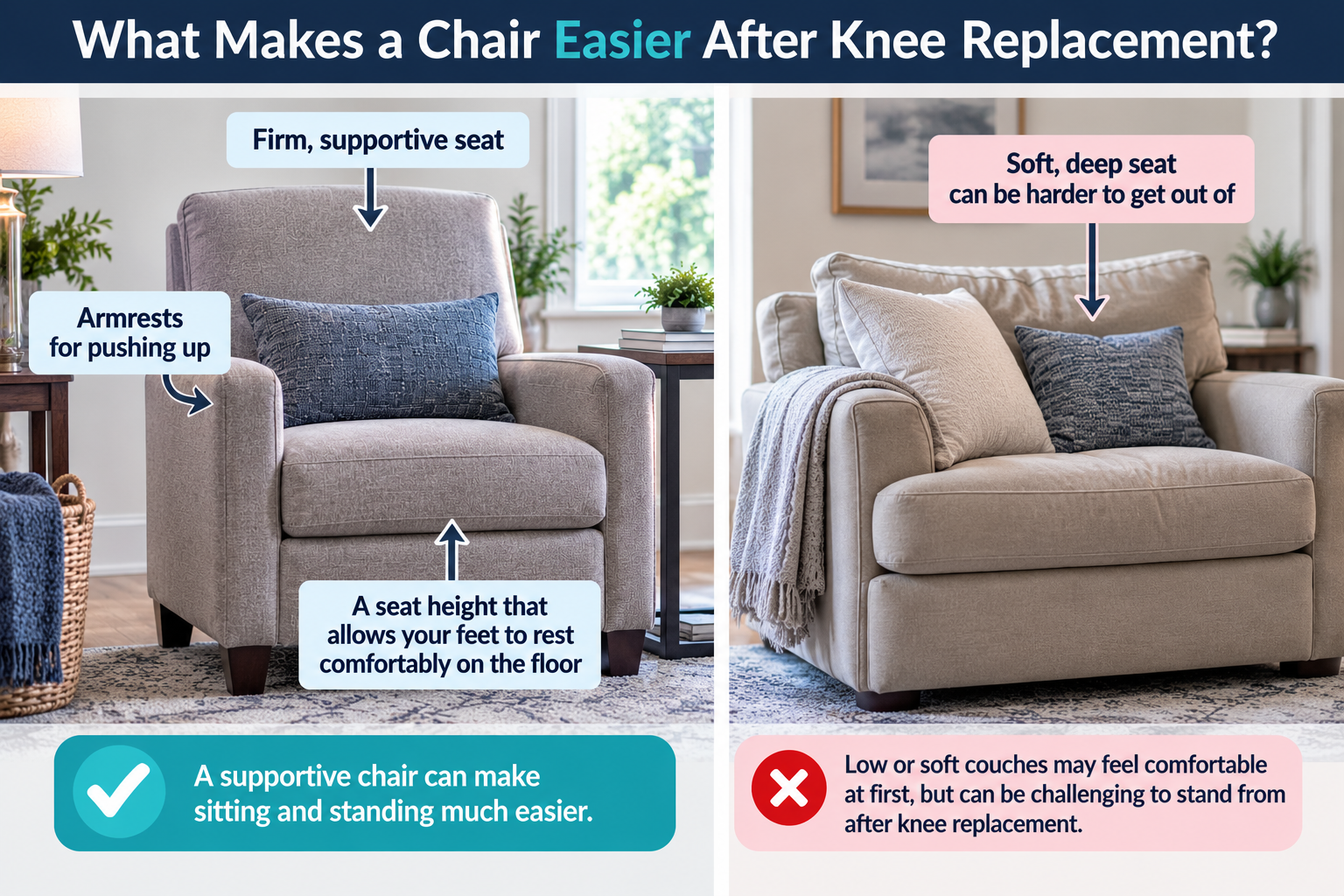
In general, a firm, supportive chair with armrests is easier to get into and out of than a low, soft chair.
Your feet should be able to reach the floor, and the seat shouldn't be so low that you have to struggle to stand.
Armrests are particularly helpful because they give you something stable to push from when standing rather than relying entirely on your recovering leg.
That favorite deep couch?
It may be comfortable once you're settled into it, but getting back out can be another story.
Do You Need a Recliner After Knee Replacement?
A recliner can be convenient after knee replacement, but you don't automatically need to buy one.
Many patients like having the ability to change positions throughout the day, particularly when the knee feels swollen or tired.
A power recliner or lift chair can make transitions easier for some people, but whether one is worth purchasing depends on your mobility, home setup, and the furniture you already have.
Before spending money on new furniture, try getting into and out of the chairs you plan to use after surgery.
If they're already difficult now, they're unlikely to become easier immediately after knee replacement.
What Bathroom Equipment Can Help After Knee Replacement?
The bathroom deserves some extra thought because it combines limited space, slippery surfaces, and several transfers you'll perform every day.
Depending on your bathroom and mobility, patients sometimes use equipment such as:
a shower chair or tub bench
a raised toilet seat or toilet safety frame
appropriately installed grab bars
a handheld showerhead
non-slip surfaces
You won't necessarily need every item on this list.
What matters is whether you can safely manage your particular shower, toilet, and bathroom layout during the early part of recovery.
Related: What to Expect the First 72 Hours After Knee Replacement →
A Reacher Can Be Surprisingly Useful
A long-handled reacher or grabber is inexpensive, doesn't take up much space, and can become one of those items you use far more often than expected.
Dropped your phone charger?
Sock landed on the floor?
Need something from a low shelf?
A reacher can make those little situations easier when bending, balancing, and moving around aren't quite back to normal yet.
Think About How You'll Carry Things
This is one of those details people often don't think about until they're home.
If you're using a walker, your hands are already occupied.
That makes carrying a glass of water, meal, phone, medication, or other household item more complicated than it sounds.
A walker bag or basket can help with smaller objects. Some patients also find strategically placed tables or other surfaces useful so commonly needed items stay within easy reach.
The goal isn't to create a perfect recovery station.
It's simply to reduce unnecessary trips and awkward carrying during the period when moving around takes more effort.
Related: How Should a Walker Fit After Knee Replacement? →
Pillows Can Be Useful — But Positioning Matters
Having several supportive pillows available can make resting more comfortable and help when positioning the leg.
But more pillows aren't automatically better.
How you position the knee matters, particularly during the early recovery period. Follow the positioning instructions provided by your surgeon and physical therapist rather than simply placing pillows wherever feels easiest.
Don't Forget the Simple Things
Some of the most helpful changes aren't special pieces of medical equipment at all.
Before surgery, consider the everyday things you'll want within easy reach:
medications, water, phone chargers, glasses, tissues, books or a tablet, ice or cold-therapy supplies, and whatever else you routinely use.
Also look around for obstacles that could become more problematic when you're walking differently or using an assistive device.
Loose rugs, cluttered walkways, cords, and frequently used items stored in inconvenient places are much easier to address before surgery than after you get home.
Related: What Should You Bring to the Hospital for Knee Replacement Surgery? →
Do You Need to Buy Everything Before Surgery?
Probably not.
It's easy to see long lists of “must-have knee replacement products” online and assume you need all of them.
You usually don't.
Your needs depend on your home, mobility, bathroom setup, surgeon's recommendations, and how much assistance you'll have available.
Some equipment may also be provided or recommended by your hospital or surgical team.
Before buying a large amount of recovery equipment, find out what your medical team expects you to use and what you may already receive.
Preparing well doesn't mean buying everything. It means solving the problems you're actually likely to encounter.
Related: Will I Need a Walker After Knee Replacement Surgery? →
Walk Through Your Home Before Surgery
One of the simplest ways to prepare is to imagine yourself coming home with a sore, swollen knee and possibly using a walker.
Start at the entrance.
How will you get inside?
Then walk through the route to your main chair, bathroom, bedroom, and kitchen.
Ask yourself:
Is anything difficult to reach?
Is there enough room for a walker?
Are the chairs easy to stand from?
Could anything become a tripping hazard?
Are the things I use every day stored somewhere convenient?
You may notice potential problems that wouldn't appear on a generic equipment checklist.
Related: How to Set Up Your Ride Home and Support Team →

The Best Recovery Setup Is the One That Fits Your Home
You don't need to turn your house into a hospital room before knee replacement.
A good setup simply makes the things you'll do every day a little easier.
A supportive chair. A safer bathroom. Clear walking paths. Frequently used items within reach. A few helpful tools where they actually solve a problem.
Small changes can make a meaningful difference when you're tired, swollen, sore, and adjusting to moving around after surgery.
Preparing those things ahead of time means that when you come home, you can spend less energy figuring out your environment—and more energy focusing on recovery.
Want a Step-by-Step Home Setup Plan?
The Knee Replacement Home Setup Guide helps you think through your home before surgery so you're not trying to solve everyday problems once you're already recovering.
Explore the Knee Replacement Home Setup Guide →
Want More Support for Knee Replacement Recovery?
The Knee Replacement Recovery Bundle brings together Post Op Ready's guides and tools for preparing for surgery and navigating the questions that come up throughout recovery.
Explore the Knee Replacement Recovery Bundle →
Preparing for Knee Replacement?
Start with our FREE Knee Replacement Checklist to help you think through the essentials before surgery and prepare for your first days at home.
